MONTH 2023

ASSEMBLY LINES
Humanoid Robots Are Moving From Hype to Reality
FRANKFURT, Germany—Human-sized machines equipped with two arms and two legs are slowly making their way into factories. They feature state-of-the-art actuators and sensors powered by artificial intelligence technology.
Humanoids are one of the hottest trends in robotics today. Start-ups in Asia, Europe and North America are scrambling to commercialize bipedal machines that can safely work alongside humans. The goal is to mass-produce general-purpose robots that help address severe worker shortages facing manufacturers.
“Futuristic humanoids working in homes, businesses and public spaces fuel people’s interest,” says Takayuki Ito, president of the International Federation of Robotics (IFR). “Since our environment is optimized for the human body, the demand for a quick, universal helper to maintain manufacturing and services is evident.
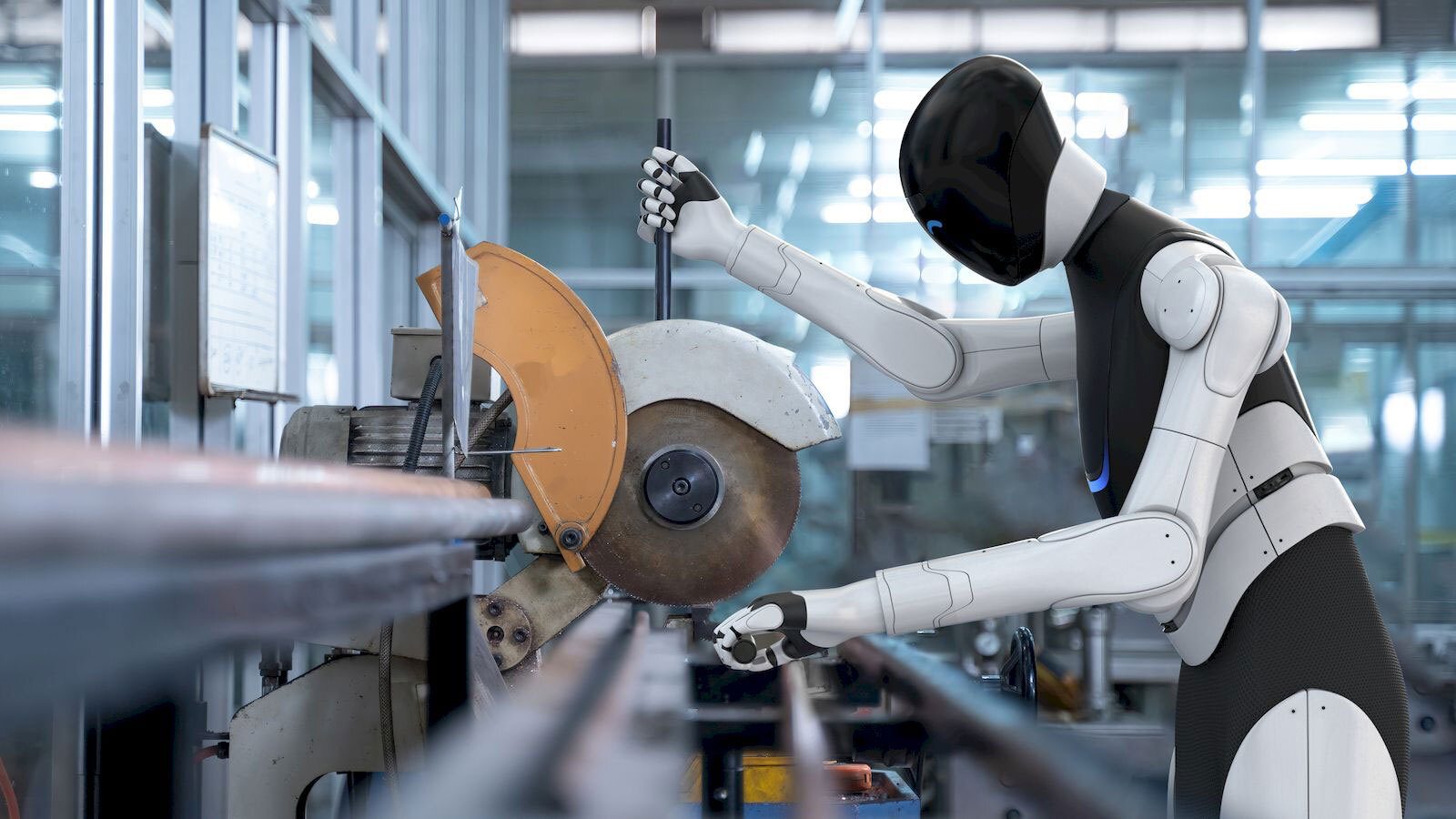
Many manufacturers are intrigued by potential applications for humanoid robots. Photo courtesy Neura Robotics
“If and when a mass adoption of humanoids will take place remains uncertain,” notes Ito, who also serves as chief technical advisor at Fanuc Corp. “In any case, humanoids are not expected to replace the types of robots currently on the market. Instead, they will complement and expand upon existing technology.”
Thanks to their human-like dexterity and adaptability, Ito believes that humanoids are well placed to automate complex tasks that traditional industrial robots struggle with. However, he says mass adoption as universal household helpers may not happen anytime soon.
IFR recently produced a report that provides valuable insights on humanoid technology. Among other things, it separates some of the hype from reality. It also examines how humanoid technology is being developed in different parts of the world.
“In the United States, tech companies like Amazon, Nvidia and Tesla are heavily developing advanced AI and robotics technologies,” says Ito. “Besides military funding, a lot of private investments is supporting this development. [There are] a large number of start-ups developing humanoid robots.
“There is a strong interest in using humanoids in logistics and manufacturing,” claims Ito. “These machines are seen as tools for enhancing productivity and efficiency, rather than as social companions. The focus is more on practical applications and less on integrating robots into daily social life.”
China has put humanoids at the center of its national strategy. The government wants to showcase its competency and global competitiveness in this field of technology. According to Ito, one key element of the Chinese strategy is to establish a supply chain for key components that is scalable.
Japan has been a pioneer in the development of humanoid robots since Honda's Asimo machine debuted in 2000. Since then, a variety of machines designed as “social robots” have been deployed in educational settings, retail stores and elderly care facilities. The focus is on creating robots that can live harmoniously with humans and are accepted as part of society.
“Europe places a strong emphasis on the ethical implications of robotics and AI,” says Ito. “It has a significant focus on collaborative robots that work alongside humans in industrial settings. The [emphasis] is on enhancing safety, efficiency and human capabilities [Industry 5.0], rather than on replacing human workers.”
IT-OT Collaboration Drives Digital Transformation Initiatives
ARLINGTON, VA—To enable successful implementation of advanced manufacturing technologies, information technology and operational technology departments must work together and cooperate. According to a recent study conducted by the Manufacturers Alliance Foundation, successful companies have a well-designed IT-OT convergence strategy.
“When executive leaders champion digital transformation, they unlock new pathways to reimagine operations, shedding legacy constraints and discover what a truly modern enterprise can become,” says Stephen Gold, president and CEO of the Manufacturers Alliance. “IT-OT collaboration isn’t just an organizational benefit for cybersecurity, but a strategic investment into future potential.
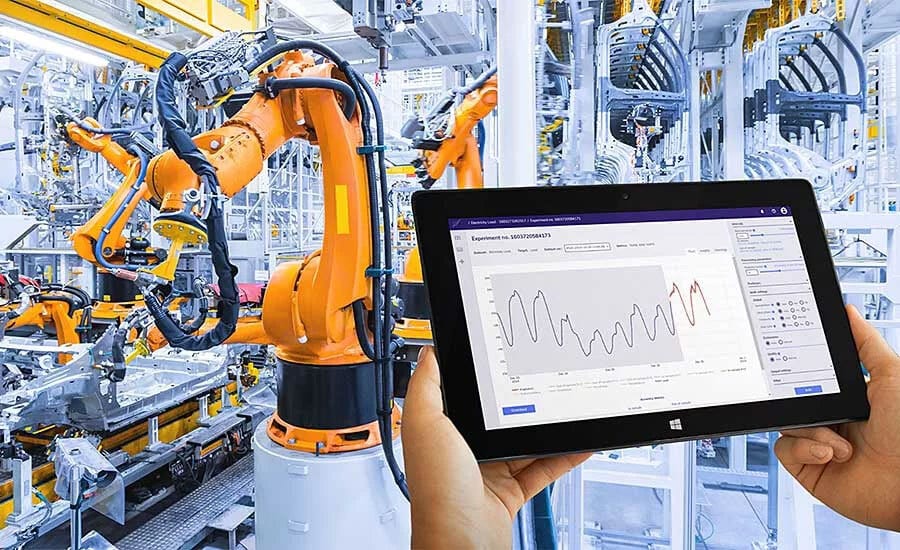
Manufacturers must have a well-designed IT-OT convergence strategy. Photo courtesy Siemens
“Companies advanced in IT-OT convergence already see the competitive advantage their journey has delivered,” claims Gold. “They are primed to seize the moment as breakthrough innovations occur, and thereby solidify and expand their advantage over companies that lag.”
“The Power of Breakthroughs in IT-OT Collaboration” study discovered that those manufacturers are more confident in their efforts to protect data and intellectual property. In fact, they are more than twice as likely to respond and recover from a cyberattack.
In addition, 69 percent of leading-edge companies believe their IT-OT progress makes them more competitive, vs. only 46 percent of less advanced organizations.
“Network segmentation is a foundational step for IT-OT convergence, but remains an impediment,” warns Gold. “For many manufacturers, segmentation is an iterative process and therefore still a work in progress.”
New AI Tool Could Make Assembly Faster and More Efficient
PITTSBURGH—Engineers at Carnegie Mellon University (CMU) have developed an AI-powered tool that uses text prompts to assemble objects faster and more efficiently.
BrickGPT takes a simple word, such as “guitar,” and creates a step-by-step guide for a person or a robot to build a physically stable model of that object. The tool currently uses Lego bricks to create items.
“This research paves the way toward generative manufacturing, which is when people can use a generative model to design everyday objects they can build themselves,” says Jun-Yan Zhu, Ph.D., an assistant professor at CMU’s Robotics Institute. “They can build a chair, a sofa or a toy.
An AI-powered tool uses text prompts to assemble a variety of objects out of Lego bricks. Photo courtesy Carnegie Mellon University
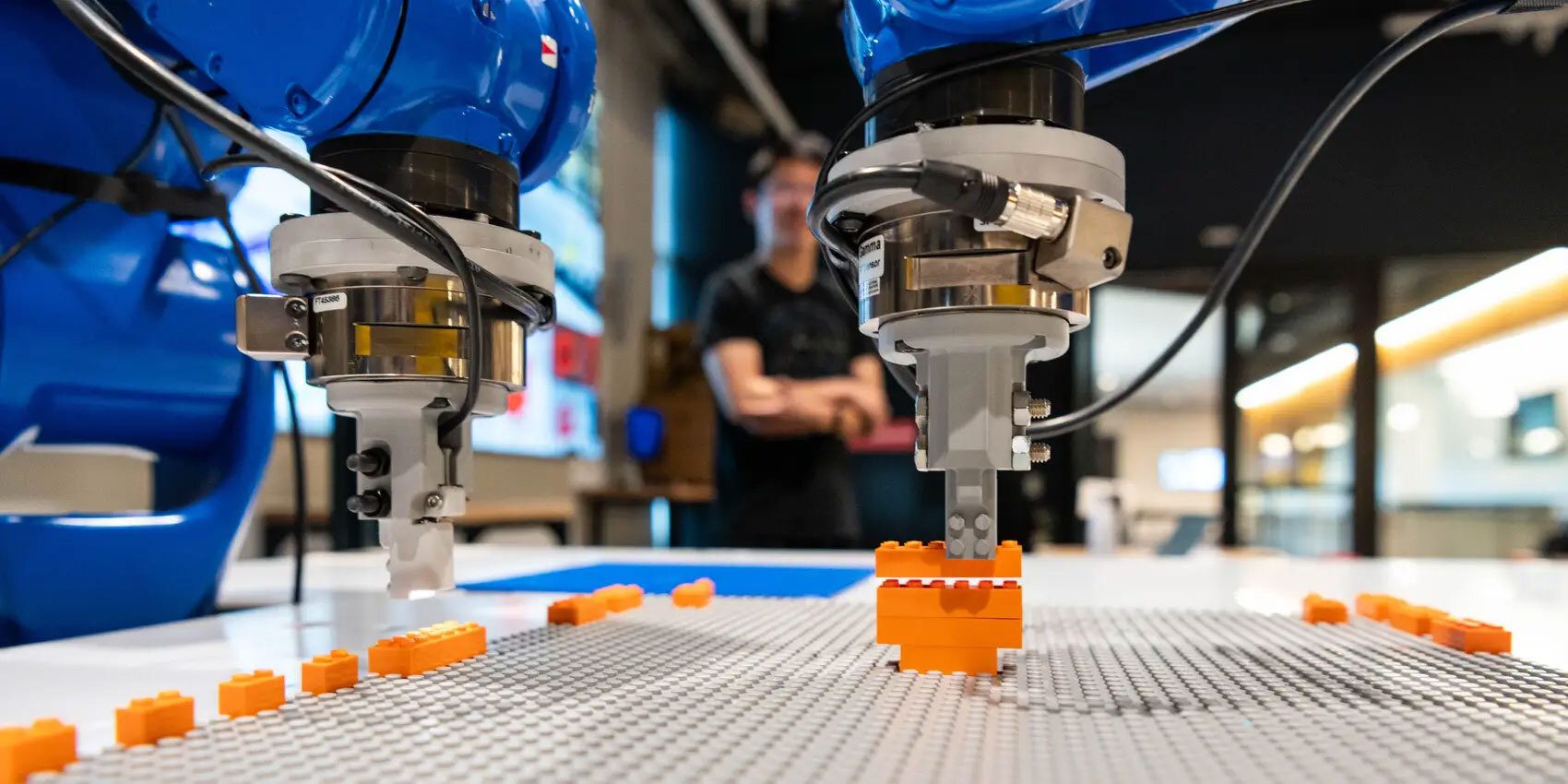
“This is a new frontier, a new usage of these models beyond creating social media videos or photos,” explains Zhu. “These brick toy pieces are a simple medium, and it’s a starting point.”
Zhu believes this fusion of AI and robotics could speed up the process of designing and building many types of products.
“This could be a huge benefit to the manufacturing world,” claims Changliu Liu, Ph.D., an associate professor at the Robotics Institute. “It takes a long time to turn ideas into a physical design and prototype. But, if you can integrate generative AI into the process, it can significantly improve efficiency and reduce the roadblocks to kicking off projects.”
BrickGPT can currently assemble 21 types of items out of Lego bricks, including a birdhouse, piano and sofa. To generate the latter, CMU engineers type the word “sofa” into BrickGPT, which generates a 3D model. Then, an algorithm transforms the model into brick structures and BrickGPT checks to ensure the structure is stable. A person or robotic arm can follow the steps and build the sofa.
To train BrickGPT, the engineers generated StableText2Brick, a dataset containing more than 47,000 brick structures made from more than 28,000 unique 3D objects accompanied by detailed captions.
An autoregressive large language model predicts the next brick based on the previous one, ensuring that the structure is stable and won’t fall over. If there’s an error along the way, BrickGPT goes back and eliminates unstable points to guarantee the structure's stability.
Zhu and his colleagues hope to scale up this model, enabling it to generate more than the current 21 objects. They also plan to expand the diversity of their library pieces to increase the accuracy and complexity of generated designs.
Manufacturers Face Growing Cyber Risks
MILWAUKEE—Cybersecurity has become a critical issue for all manufacturers today, according to a new report from Rockwell Automation Inc. The 10th annual “State of Smart Manufacturing Report” claims that companies are beginning to use artificial intelligence technology to help manage these risks and protect their factories from attacks.
“Cybersecurity is no longer just a technology issue—it’s a boardroom issue,” says Stephen Ford, vice president and chief information security officer at Rockwell Automation. “As IT and OT become more connected, the attack surface is expanding.
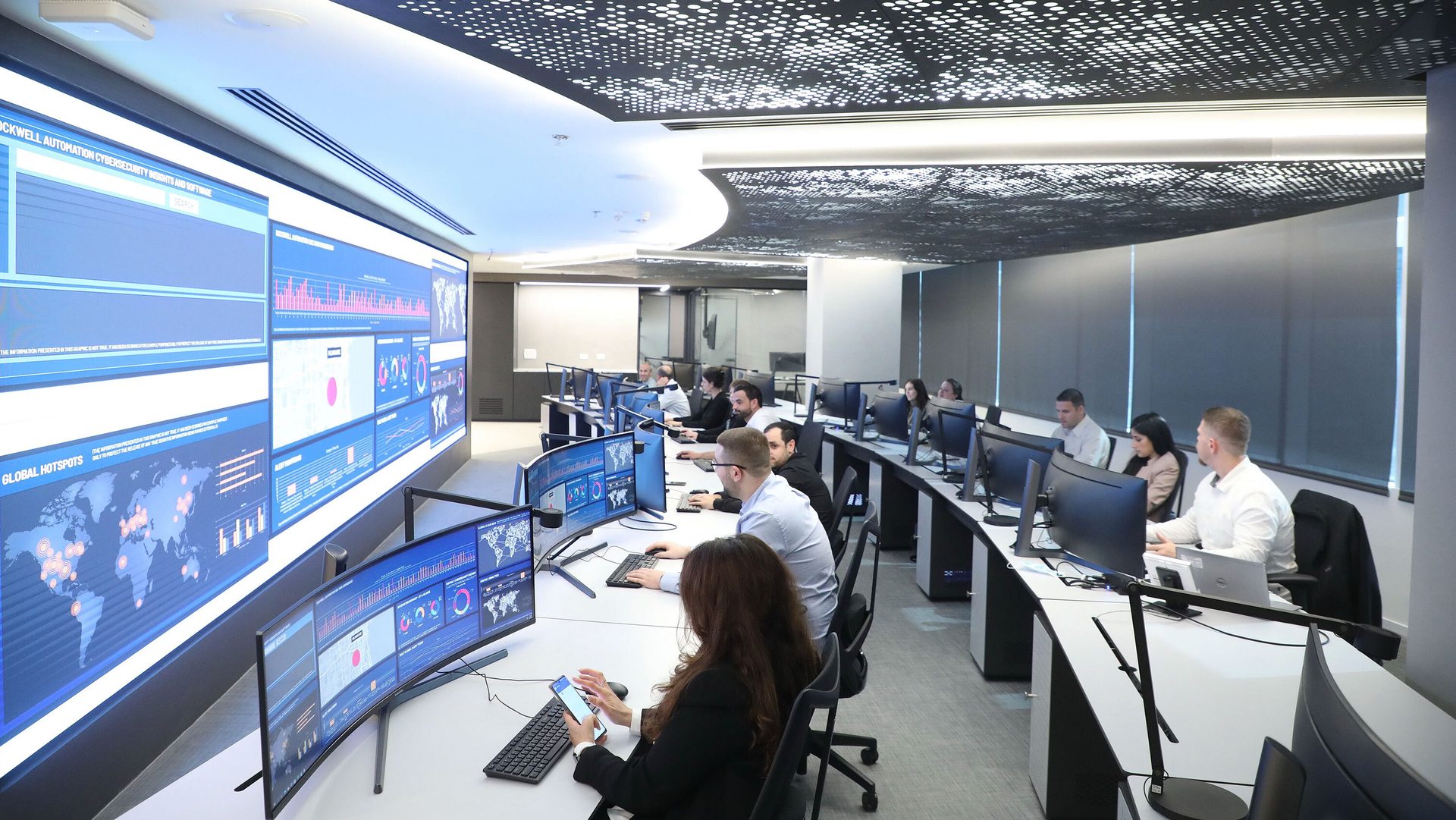
More manufacturers are using AI technology to protect their factories from cyberattacks. Photo courtesy Rockwell Automation Inc.
“Our latest research confirms what we’re seeing firsthand: Cyber risk is now one of the top threats to manufacturing growth,” warns Ford. “You can’t protect tomorrow's enterprise with yesterday’s tools."
According to survey respondents, cyber threats are among the most serious external risks facing manufacturers today. Cybersecurity (30 percent) now ranks among the top external risks, second only to inflation and economic growth (34 percent). However, workforce development continues to be a major hurdle.
“A shortage of skilled talent, training challenges and rising labor costs remain significant barriers to competition,” says Ford. “As manufacturers recruit the next generation, cybersecurity and analytical skills are also becoming hiring priorities, reinforcing the need to align technical innovation with human development.
“Cybersecurity has become a business enabler,” adds Ford. “It’s no longer just about preventing threats; it’s about empowering transformation with confidence. The most forward-thinking manufacturers are proactively leveraging advanced technologies like AI to stay ahead of evolving risks.”