
MONTH 2023

Manufacturing Software
Labor shortages are driving new demand for automation.
Options for Screwfeeding
Airbus uses wireless IoT technology to track nearly 100 percent of its manufacturing assets as they travel between France, Germany, the UK and other countries. Photo courtesy Airbus
Wireless IoT-based technology helps manufacturers keep tabs on containers, machinery, tooling and finished goods.
Asset-Tracking Technology
Manage Production With
Laurence Claeys, Ph.D. // Product Manager and Co-founder // Sensolus // Ghent, Belgium
The idea of the internet of things (IoT) is simple: Devices, sensors and other “smart” objects are connected to the internet, allowing them to collect and exchange data with each other or a central computer.
Manufacturers have been applying IoT technology for quality control and predictive maintenance for several years. Now, companies are also using the technology to track and manage assets, such as containers, trailers, machinery, tools and pallets carrying high-value goods.
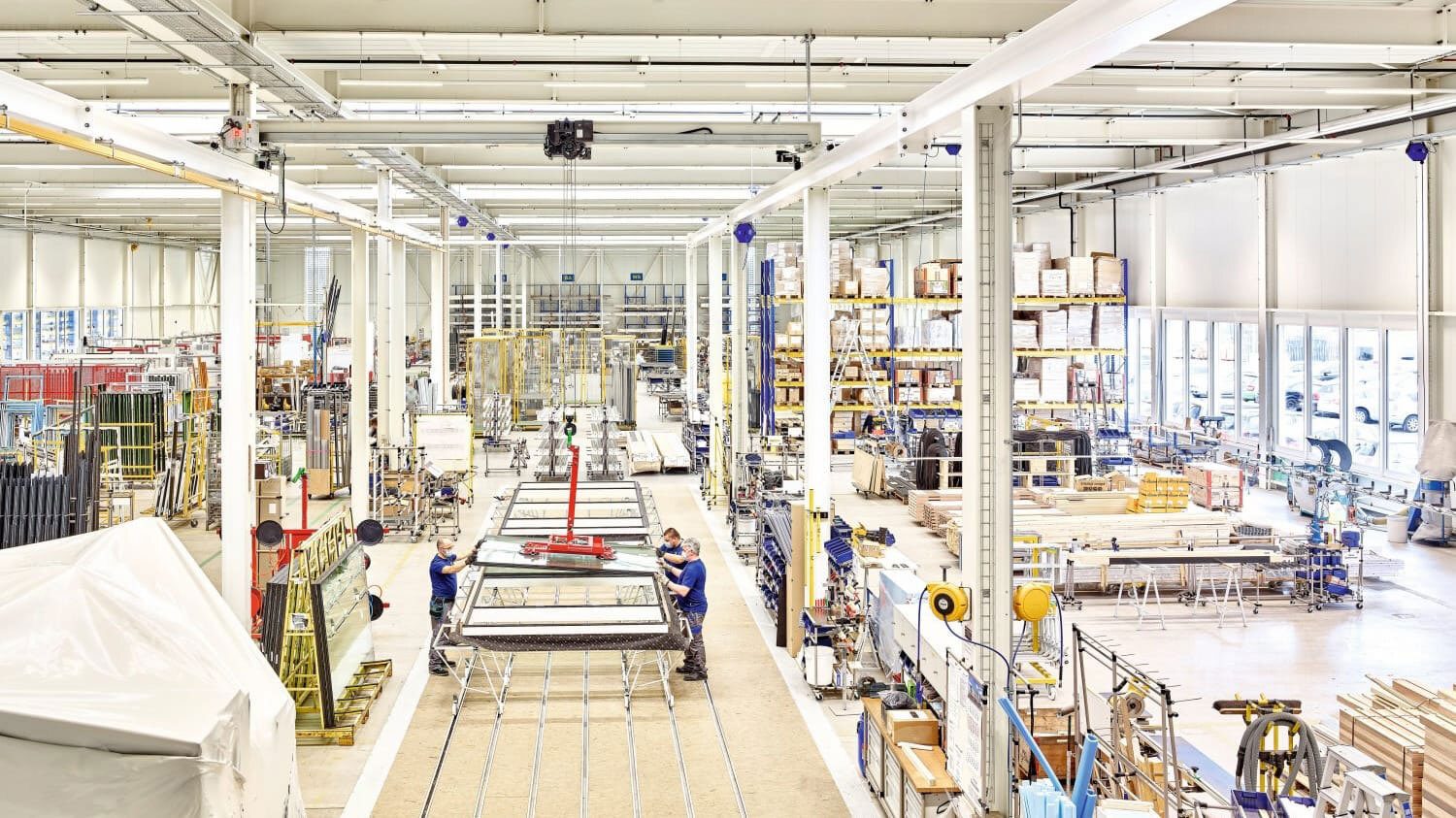
Window manufacturer 4B has automated tracking for more than 4,000 of its reusable special containers using IoT-based technology from Sensolus. Photo courtesy Sensolus
IoT tracking technology consists of two main components:
• wireless, weatherproof, battery-powered tags, or trackers, that are attached to assets.
• cloud-based software that collects, organizes and displays data from trackers.
The trackers communicate via Narrowband IoT, a radio technology standard developed by 3GPP for cellular networks. It operates over existing mobile networks and is specifically designed to connect devices that require small amounts of data transmission, low bandwidth, and long battery life. The technology was standardized in 2016 and has since gained traction among mobile operators worldwide.
Geolocation is accomplished through global navigation satellite systems, Wi-Fi scanning and Bluetooth Low Energy technology.
Trackers can communicate where they are, as well as variables such as temperature or vibration. The configuration of the tags can be adjusted remotely. For example, engineers can change status updates or the frequency of data transmission.
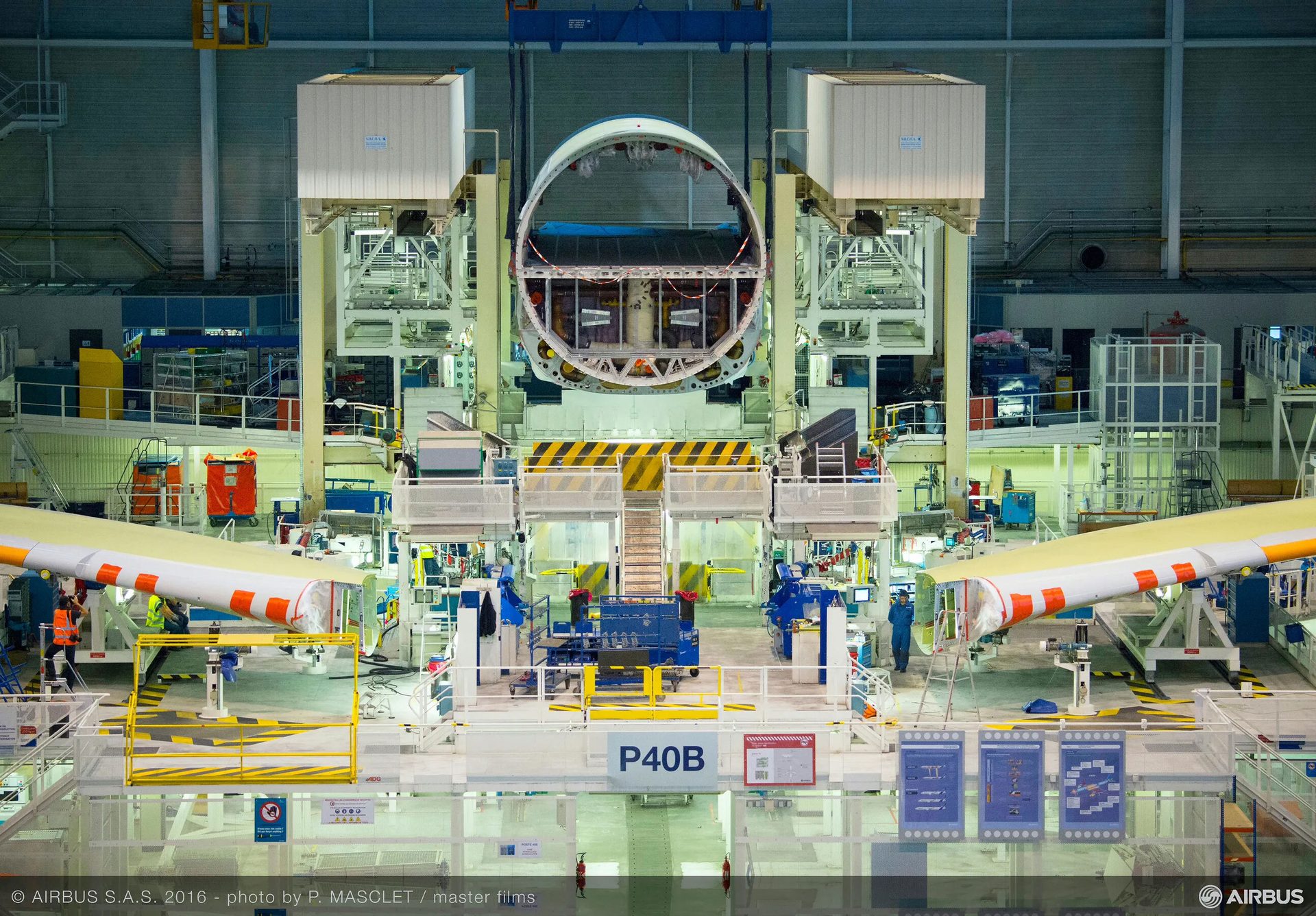
Finding a specific production asset inside an assembly plant spanning more than 1 million square feet would be a daunting task without IoT technology. Photo courtesy Airbus
Trackers can be attached to any object, from trailers to containers to construction equipment. They can be secured with rivets, threaded fasteners, magnets, cable ties or adhesive. To ensure trackers remain attached, manufacturers might have to make minor modifications to the asset so that they do not come loose or get damaged. This could be a cutout in a box or a snap-on holder.
However, there’s no need for invasive hardware installations, such as power or data cables. Once affixed to the item, the tracker generates data that is automatically sent to the cloud.
From Dashboard to Mobile App
Trackers generate huge quantities of data, such as location points, status updates and alerts. Cloud-based software provides a clear way to interpret and use that data, which translates into concrete actions to optimize processes.
Through the software, engineers can create a dashboard tailored to their needs, presenting the data in easily understandable visualizations. For example, manufacturers can see where all their assets are on a map in real time or receive an automatic warning when a trailer is idle for a designated period, enabling timely intervention.
Personnel in the field can access the data through a mobile app anytime and anywhere. For example, warehouse workers, maintenance personnel or groundskeepers driving around an airport have little time to boot up a computer and log into a platform. Instead, they can access a tracking system’s mobile app to locate a dolly, or they can photograph a damaged asset and add the image to the system’s asset profile.
The asset-tracking software can integrate with existing enterprise resource planning systems through an application programming interface. This is especially effective in sectors like aviation, where multiple stakeholders operate in the same ecosystem. It is similarly useful at logistics hubs. Employees can log in and view the data directly in their own IT environment.

Use Cases
Thanks to optimized internal battery management, trackers can last a long time. They are also designed to withstand harsh conditions, such as temperature fluctuations, humidity and impacts. As a result, tracking technology is effective and deployable in virtually any environment, such as large construction sites or on boats.
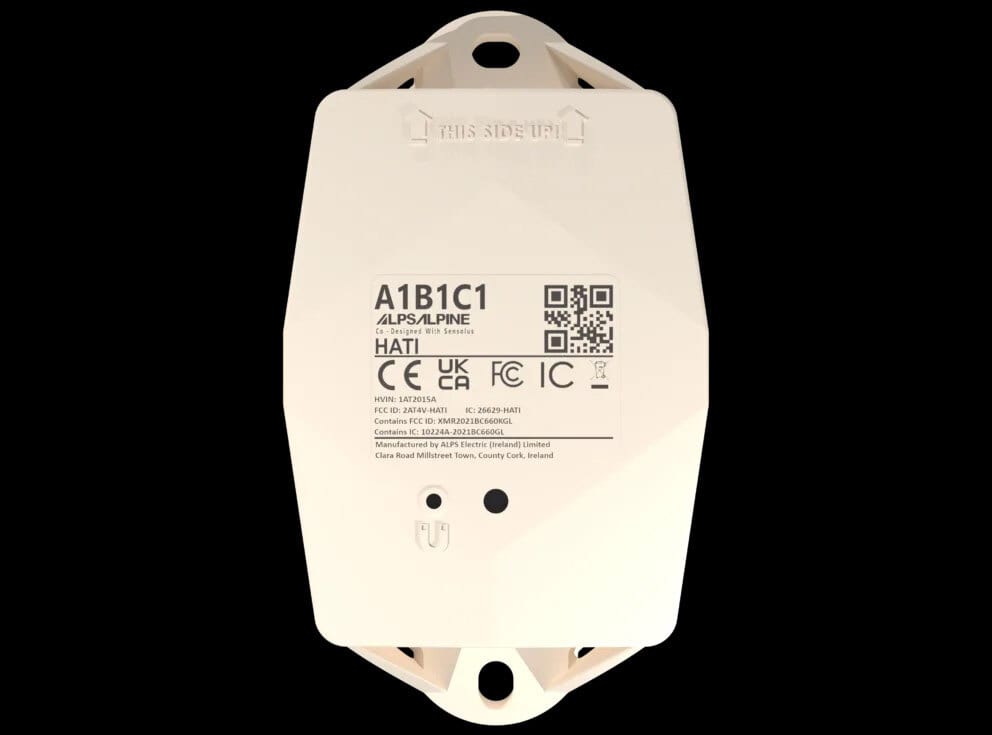
The trackers communicate via Narrowband IoT, a radio technology standard developed by 3GPP for cellular networks. Photo courtesy Sensolus
Real-life examples include:
• Logistics and transport. A large brewery will operate a fleet of trailers that are constantly on the road delivering orders. Trackers provide insights into their exact locations, loading or unloading time for trailers, and therefore, how long they may be idle.
• Construction. Asset tracking can immediately identify when cargo arrives, ensuring that nothing is left behind. This prevents lost materials and unnecessary delays. It is also a sustainable approach: By monitoring assets, waste is minimized.
• Aviation. Trackers are indispensable at airports, to help in monitoring ground support equipment, such as baggage trolleys, aircraft stairs and baggage belts. This allows crew to instantly see where the nearest airplane stairs are in the app, saving time, fuel and crew costs.
• Repair and service. Some assets travel around the world for maintenance or repair. Thanks to a tracking system, employees will always know whether an asset has arrived at the service location, if it has already been repaired, and if it is being transferred to its final destination. Thus, less material gets lost, saving costs and avoiding delays.
While no tracking system is entirely plug-and-play, the time and resources required are well worth the investment. The benefits of tracking systems are significant:
• Logistics managers finally have visibility into all of the company’s assets.
• Purchasing managers can create reports at the touch of a button.
• Maintenance crews can complete quick updates in the field.
• C-suite executives can use the dashboard to see where every critical part of the supply chain is worldwide.
IoT doesn’t have to be complicated. When thoughtfully designed, user-friendly, and integrated into a single cohesive system, it becomes both powerful and remarkably simple.
For more information, visit www.sensolus.com.
“Waiting” is one of the seven wastes of lean manufacturing. This can be waiting for a delivery from a supplier or waiting for a technician to fix a machine. It can also be wasted time. Time devoted to looking for tools, jigs, supplies and other assets would be better spent adding value to products.
If wasting time looking for a specific tool on a crowded workbench is irritating for a home hobbyist, imagine the frustration of trying to find a specific production asset within the confines of an assembly plant spanning more than 1 million square feet?
Wireless Tech Helps Airbus Keep Track of Assets
This is exactly the sort of scenario that Airbus is trying to avoid by implementing wireless asset-tracking technology from Sensolus throughout its global manufacturing network. The technology has enabled Airbus to create digital twins of the assets responsible for moving critical airplane components through the production process—even when the process spans international borders. By attaching active trackers to jigs, fixtures and other industrial assets, Airbus has achieved complete visibility of multiple workflows both at its factories and those of its suppliers.
Airbus is now rolling out Sensolus’ latest Bluetooth Low Energy (BLE) technology to track specialized tools within its warehouses. The BLE technology allows Airbus to enhance inventory management, theft protection, and asset localization.
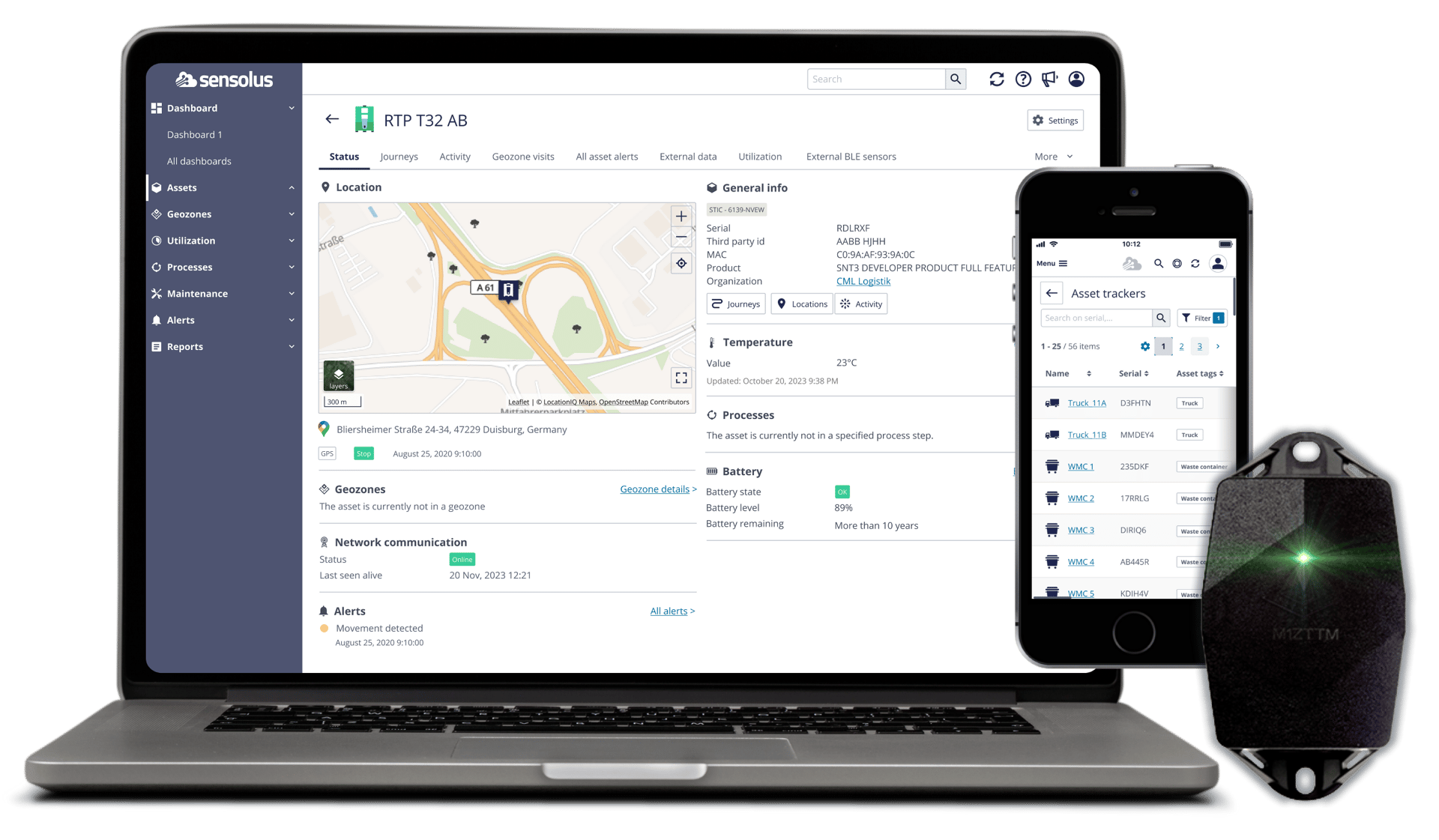
IoT tracking technology consists of two main components: wireless trackers that are attached to assets, and cloud-based software that collects, organizes and displays data from trackers. Photo courtesy Sensolus
The technology is already saving time for Airbus. For example, engineers can now quickly locate essential tools whenever they are needed. Engineers can find a misplaced tool within minutes, minimizing disruptions to production.
Airbus uses the technology to track nearly 100 percent of its manufacturing assets as they travel between France, Germany, the UK and other countries. Sensolus provides dedicated support to the aerospace giant, ensuring seamless operation and optimization of the technology. Sensolus’ data recovery algorithm ensures that critical information is never lost.
ASSEMBLY ONLINE
For more information on asset tracking technology, visit www.assemblymag.com to read these articles: