SUSTAINABILITY
By Michelle Schack, D.V.M., Co-Founder, DairyKind
How On-Farm Animal Well-Being Shapes Food Safety Outcomes
What veterinarians wish food processors knew (and vice versa) about food safety risks and safeguards
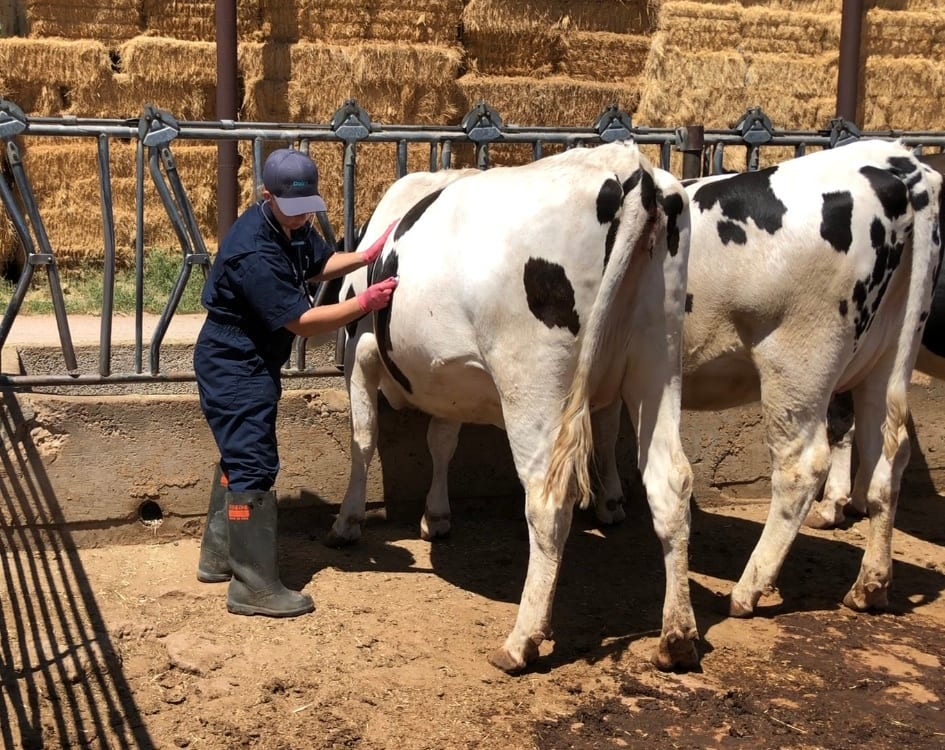
Image credit: M. Schack
SCROLL DOWN
Food safety starts earlier in the supply chain than one might think. Once an animal or animal product reaches the processing plant, countless decisions have already been made that impact the end product.
Food safety risk starts on the farm, before the milk truck arrives to pick up the milk, the transporter loads their trailer, or a lot code is assigned to the group. Daily decisions that are often taken for granted throughout an animal's life affect the final product. Animal health, comfort, housing, nutrition, handling, and most importantly the people responsible for their daily care are more influential than they realize. Veterinarians working in food animal systems see this connection: animal well-being is not just an ethical consideration; it is critical to shaping food safety outcomes for the end product.
Despite this reality, veterinarians and food processors often operate in parallel rather than in partnership. Both are accountable to regulators, both are motivated by risk reduction, and both ultimately serve the same public health goal; yet they frequently speak different languages and focus on different points in the system. This disconnect creates blind spots, missed opportunities, and unnecessary tension.
Bridging the gap between on-farm animal well-being and downstream food safety is not about assigning blame upstream or downstream. It is about recognizing where risk is actually generated, how safeguards succeed or fail in real-world conditions, and how collaboration across sectors can strengthen the entire food system.
Animal Well-Being as a Food Safety Control
Animal well-being, or animal welfare, is often referred to when speaking about public trust or ethics. While these things are important, there is another lens we must use when thinking about animal well-being: risk management. Poor animal welfare in the form of stress, poor health, or poor hygiene, for example, can impact immune function, pathogen shedding, and contamination.
Stress is one of the most underappreciated factors in food safety risk. We know that stress decreases the quality and production of animal-derived foods, but it can also impact the safety of the product that animal produces. Heat stress, overcrowding, poor nutrition, or inconsistent handling can lead to immune suppression, increased disease, and increased shedding of pathogens such as Escherichia coli. These effects are well documented, but too often people are more focused on the animals that stay on the farm rather than the animals or products that leave it. Stress mitigation is an important prevention measure in food safety plans.
Animal health directly influences food safety in a more obvious but equally important way. Sick animals require more handling, assessment, and treatment. While systemically ill animals should not go to slaughter and milk from cows with clinical mastitis should be discarded, the amount of subclinical disease matters, as well. Increasing variability leads to higher risk: higher pathogen loads, higher potential for residue violations, and higher likelihood of breakdowns in communication or documentation.
Hygiene is a great example of the connection between animal well-being and food safety. While poor hygiene can lead to stress and reduced animal health, it poses its own threat to food safety. Animals that arrive at harvest heavily soiled with manure reflect upstream challenges in areas such as housing or labor. Processing plants have many protocols and plans in place to manage contamination. However, it must be considered that contamination prevented on the farm is a better intervention than contamination removed at the plant.
What Veterinarians Wish Food Processors Understood
Veterinarians working on farms see a side of food production that is often invisible to processors. One of the most important realities is that farms are complex human systems as much as they are biological ones. Everything on the farm relies heavily on people: often-multilingual teams working long hours to manage animal care, production targets, and safety protocols.
When concerns arise on the farm, it is rarely due to a lack of care or malicious intent. More often, failures arise from inadequate training, poorly designed workflow or equipment, or unclear expectations. While food safety is commonly discussed in terms of animal health and biosecurity, there is much more to food safety on the farm. Investing in training, communication, equipment, and facilities upstream can significantly reduce downstream risk.
“Viewing animal welfare and food safety as separated categories can obscure the shared root causes of failure and success.”

Setting clear expectations and working as a team are important on the farm, but they are also important between the farm and the buyer or processor. Problems may be hidden if farmers fear contract loss or penalties, rather than addressing these potential issues early. In contrast, systems that encourage open communication and clear expectations allow for the implementation of corrective actions before risks escalate.
Veterinarians also wish food processors recognized how deeply animal welfare and food safety areintertwined in daily farm operations (Figure 1). Audits often treat these concerns as separate domains, evaluated through parallel checklists. On farms, however, handling practices influence bruising and contamination, facility design affects cleanliness and stress, and health programs shape both residue risk and pathogen dynamics. Viewing animal welfare and food safety as separated categories can obscure the shared root causes of failure and success.
FIGURE 1. Veterinarians wish food processors recognized how deeply animal welfare and food safety are intertwined in daily farm operations (Image credit: M. Schack)
What Food Processors Wish Veterinarians Understood
Food processors, in turn, operate under intense regulatory, legal, and reputational pressure. A single upstream failure can trigger recalls, plant shutdowns, supply disruptions, and lasting brand damage. From the processor's perspective, even issues that are rare on the farm can have huge impacts once animals or animal products enter the high-throughput system of the processing plant.
Processors often wish veterinarians more fully appreciated how small deviations can have outsized consequences at the plant. A missed treatment record can have severe consequences. An unclear withdrawal time can impact food safety. Though these things may seem manageable at the farm level, the consequences are amplified at the processing plant.
Documentation is another area that is often overlooked. Veterinarians are trained to prioritize animal health, but processors must demonstrate control through records. Excellent animal care without clear, consistent documentation creates vulnerability in audits and regulatory investigations. Veterinarians are uniquely positioned to help farms align good practice with good documentation for treatments, training, and protocols.
Veterinarians as Translators Across the System
Veterinarians occupy a unique position in the food system. They understand animal biology and behavior, work closely with farm owners and employees, and are trained to think in terms of herd health and prevention. Veterinarians work on farms, at processing plants, and for retailers. This places them at a natural intersection between farms and processors.
Too often, veterinarians are brought into conversations only after a problem has occurred. When on-farm veterinarians are engaged early and collaboratively, they can help translate processor expectations into practical, on-farm realities, while also conveying farm-level constraints and risks back to processors in meaningful terms. This translation role is especially critical as food safety expectations expand to include animal well-being, workforce considerations, and sustainability metrics.
A Shared Responsibility from Farm to Plant
Food safety is not created at a single point in the supply chain. This responsibility should not rest on the processor alone. Food safety is built through layers of decisions, behaviors, and systems that begin long before animals reach a processing facility.
Animal well-being is not separate from food safety; it is one of its strongest predictors. Animals that are healthy, calm, and well cared for greatly decrease food safety risk. Farms supported by well-designed protocols and trained workers are better positioned to meet the expectations placed upon them.
Moving forward, the greatest improvements in food safety will come not from assigning responsibility to one segment of the chain, but from recognizing shared goals and shared constraints. When veterinarians, farmers, and food processors work together, the entire system becomes safer, more resilient, and more trustworthy.
Acknowledgment
This work was supported in part by a grant from Dairy Management Inc. to Dr. Abby Snyder.
References
- U.S. Food and Drug Administration (FDA). " Call to Action Letter to the Powdered Infant Formula Industry." March 8, 2023. https://www.fda.gov/media/166044/download?attachment.
- FDA. "Warning Letter: JM Smucker LLC., MARCS-CMS 638042." January 24, 2023. https://www.fda.gov/inspections-compliance-enforcement-and-criminal-investigations/warning-letters/jm-smucker-llc-638042-01242023.
- FDA. "Warning Letter: Guangzhou Sinocon Food Co., Ltd., MARCS-CSMS 692652." December 23, 2024. https://www.fda.gov/inspections-compliance-enforcement-and-criminal-investigations/warning-letters/guangzhou-sinocon-food-co-ltd-692652-12232024.
- Slaughter, C., S. Chuang, D. Daeschel, L. McLandsborough, and A.B. Snyder. "Moisture Matters: Unintended Consequences of Performing Wet Sanitation in Dry Environments." BioRxiv. https://www.biorxiv.org/content/10.1101/2025.11.26.690674v1.abstract.
- Grocery Manufacturers Association. "Water Audit Checklist for Low-Moisture Food Facilities." Snyder Lab at Cornell University. https://blogs.cornell.edu/snyder/tools-and-resources/.
Michelle Schack, D.V.M. is a practicing dairy veterinarian, national media contributor and speaker, animal welfare expert and advisor, and consumer and brand educator. She enjoys working with dairy farmers as a herd veterinarian and through her role as Co-Founder of DairyKind, a dairy education company. She went to UC Davis School of Veterinary Medicine and has been practicing in Arizona for the past 11 years. She works at the intersection of animal health, human systems, and risk management. With a passion for connecting farmers, consumers, and animals, she is committed to fostering sustainability and compassion in dairy farming.