CATEGORY
Riding the Wave: Seafood Sector Must Embrace Sustainability and Safety to Ensure Success
The seafood industry must ensure that operational models meet evolving market expectations, and then properly leverage them to drive profitability and success
By Lisa Goché, CEO, Seafood Collaborators LLC
SCROLL DOWN
Video credit: Philip Thurston/Creatas Video via Getty Images
> SPOtliGHT
Population growth, food insecurity, and malnutrition mean it is more critical than ever to increase the availability of healthy foods. At the same time, there is a rapidly changing landscape of challenges to which businesses must adapt. The seafood industry plays a major role in our toolbox of solutions. The magnitude of its contributions to people, the planet, and the economy are underreported and underappreciated.
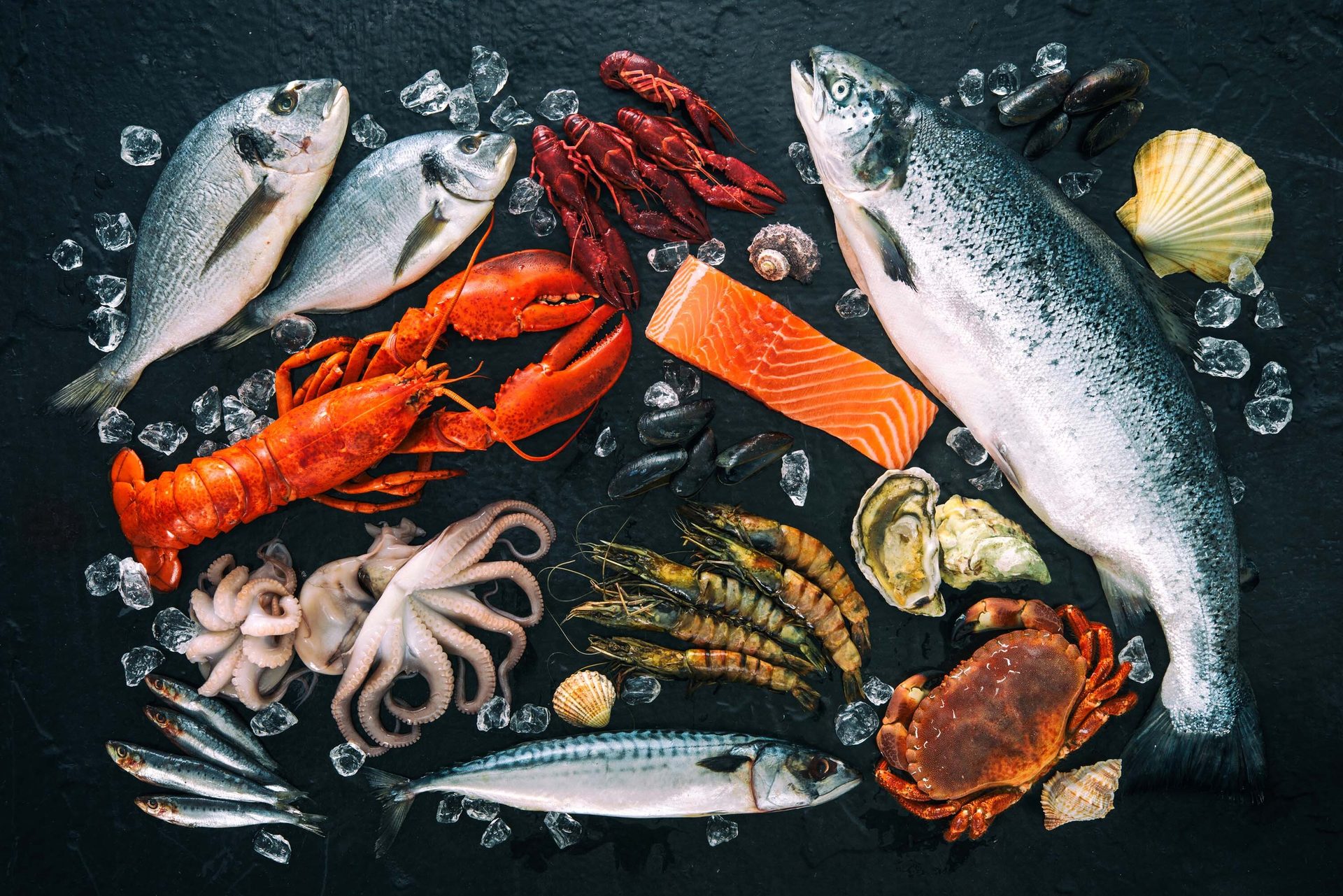
Growing the responsibly produced seafood supply depends on every part of the value chain (producers, importers, retailers, foodservice, etc.) working together (Figure 1). The seafood industry must ensure that operational models meet evolving market expectations, and then properly leverage them to drive profitability and success. It must embrace accelerating trends that demand more data, transparency, verification, and sustainable practices. It must also create integrated business and operational plans, replacing any tired, outdated approaches that are no longer suitable for effectively meeting today's challenges.
Applying Modern Technologies in Microbiology to Improve Food Safety
Traditional Serotyping
Identifies the dominant Salmonella serovar based on surface markers. Why it matters: useful, but it can miss low-level or slower-growing serovars.
Deep Serotyping
Uses sequencing to detect multiple Salmonella serovars in the same sample. Why it matters: finds emerging or high-risk serovars that routine methods overlook.
Metagenomics
Captures all DNA in a sample at once to reveal every microbe present. Why it matters: shows hidden reservoirs and mixed communities that traditional tests miss.
Whole Genome Sequencing (WGS)
Reveals all DNA of a Salmonella isolate, and comparison to others shows how strains are related. Why it matters: helps link what a facility finds to strains connected with illness.
FIGURE 1. Growing the Responsibly Produced Seafood Supply Depends on Every Part of the Value Chain Working Together (Image credit: AlexRaths via iStock / Getty Images Plus)
The Amazing Story of Seafood
As a young person in Alaska, I walked into a seafood facility to make money for college. From that time on, I was hooked. I worked with fishers and processors in remote villages and watched 30-foot waves crash over icy decks from the bridges of different vessels. I remember skiffing on a dark February night from one catcher/processor to another in the Bering Sea. I partnered with wonderful people on farms in Asia and Latin America, learning about their operations and culture while developing best practice solutions for biosecurity, water conservation, and other needs. I also served on international boards, collaborating on pressing issues such as environmental stewardship and human rights.
These are but a few examples of the adventure and opportunity a career in the seafood industry offers. Highly complex, global, and multicultural, seafood is an exciting, innovative, and science-based sector of the food industry. Hundreds of wild and aquaculture (farmed) species cultivated by diverse peoples in different regions offer a rich smorgasbord of flavors. Seafood is an interwoven web of producing nations dependent on the sector and importing countries that rely on them for supply. For example, the U.S. imported approximately 79 percent of its seafood in 2020, according to NOAA Fisheries.1
In the global fight against food insecurity and malnutrition, seafood is an essential source of nutrient-dense, healthy protein. Worldwide, 2.3 billion people were considered moderately or severely food insecure in 2023, according to FAO.2 Wealthier countries are not immune to this issue. In the U.S., for example, 11–15 percent of households experienced food insecurity from 2001 to 2023.3 Population growth is an added pressure, with the number of people expected to reach nearly 10.3 billion globally by the mid-2080s, according to United Nations estimates for 2024.4
FIGURE 2. International Trade of Aquatic Products, 2022 (Image credit: FAO5)
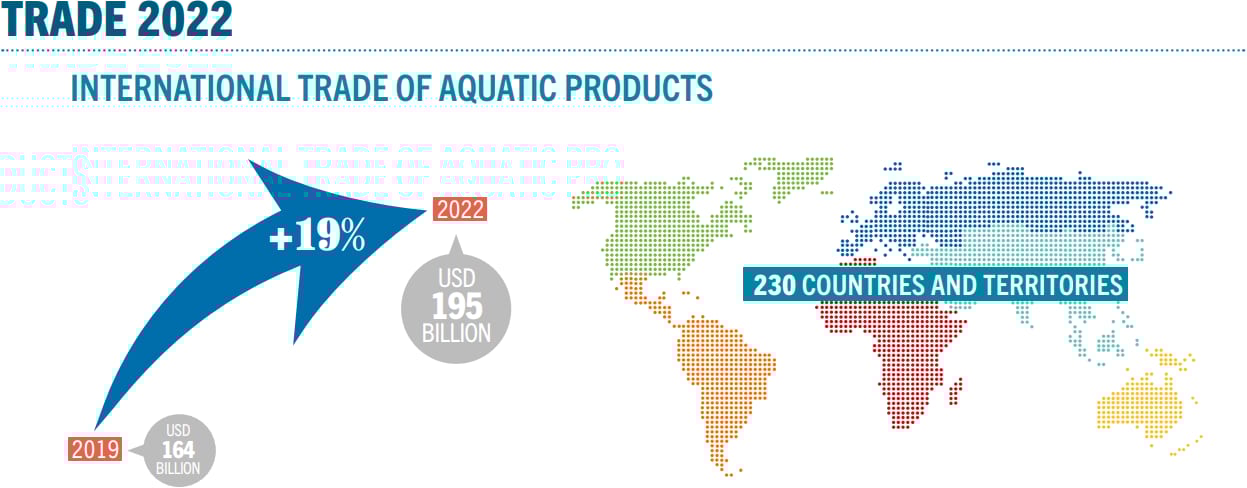
According to the Food and Agriculture Organization of the United Nations (FAO), 59 million people were employed in the primary (fishing and farming) sector in 2022, not including post-harvest activities such as processing, transport, trading, etc. Over 90 percent of employees work in small-scale fisheries. Across the full value chain (including subsistence fisheries), FAO estimates that roughly 600 million people depend on the seafood sector for their livelihoods, with the large majority located in the global south.5
FIGURE 3. Utilization of World Fisheries and Aquaculture Production (Image credit: FAO6)
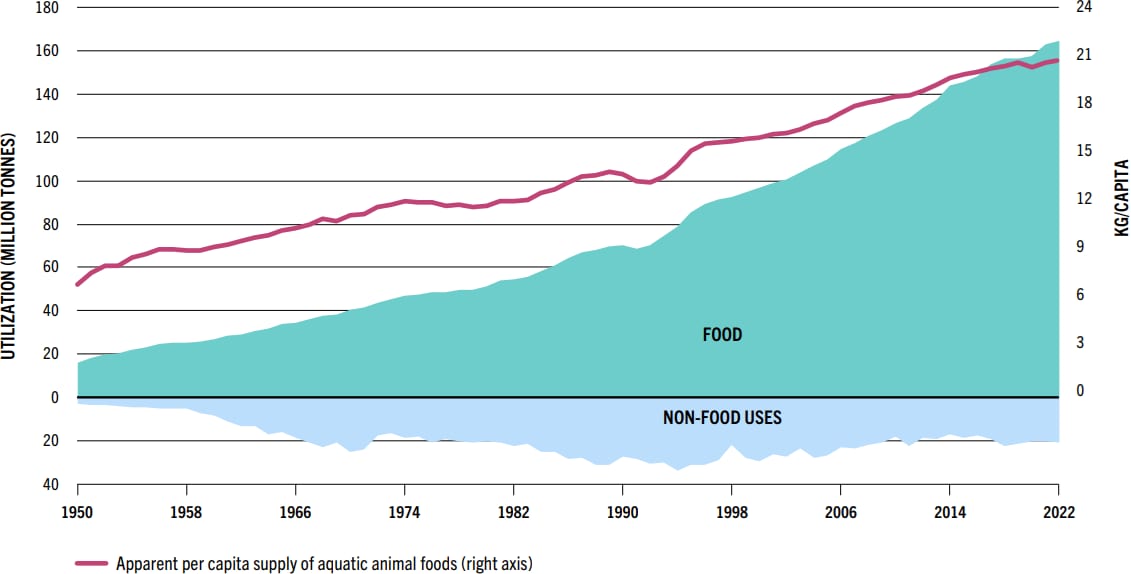
In the U.S., seafood consumption has also been increasing due to greater consumer demand, nutrition awareness, and sustainability improvements in harvesting practices. As a result, the seafood industry is expected to grow significantly in 2026 and beyond.7
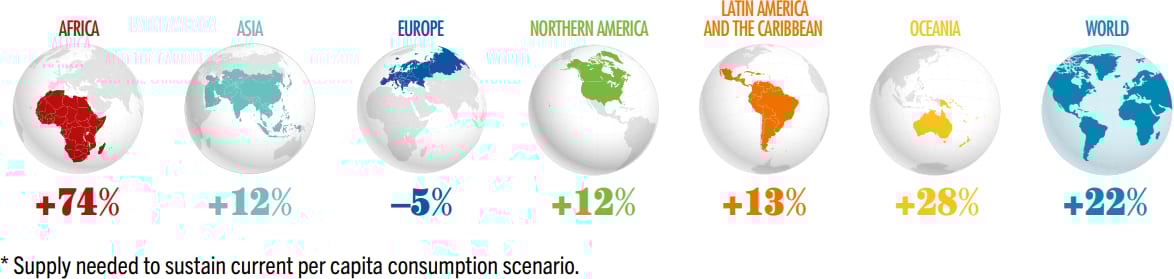
Society's nutritional needs and rising populations will require a significant increase in the seafood supply over the next 25 years. Figure 4 shows the necessary growth rates to maintain current per-capita consumption levels. If those levels continue to increase in response to rising demand, then growth will need to be even higher.
FIGURE 4. Need for Growth in Supply of Aquatic Animal Foods by 2050 (Image credit: FAO5)
Increasing Complexity and Demands
Seafood supply chains can be very complex. Wild capture involves fishing boats of all sizes and gear types (long line, trawl, purse seine, etc.) and trip lengths ranging from hours to months. The story is similar for farmed products. Seafood is grown using a variety of feed formulations and culture environments on land and in lakes and oceans (ponds, net pens, cages, recirculating aquaculture systems, and others). As with other commodities, distribution networks can be simple and short or very long, involving multiple entities depending on point source and markets.
Increasing competition, higher operating costs, and rapidly evolving landscape and climate challenges add to this inherent complexity. In both mature and emerging economies, demands are accelerating for more transparency, data, and third-party verification of best practices and compliance across all aspects of the value chain. These trends are not unique to the seafood industry.
Growing consumer expectations around food safety, quality, and sustainability are partly driving these trends. Worldwide, environmental, social, and governance (ESG) or corporate social responsibility (CSR) concerns span many topics relevant to seafood, including animal welfare, environmental responsibility, human trafficking, and others.
Moreover, media and nongovernmental organizations have exposed potential bad actors. In response, seafood businesses have increasingly provided additional verification of compliance to mitigate risk. Additional verification may be triggered internally, by customer request, or both. Expanding global regulatory frameworks and tightening customer specifications are adding to these pressures.
“Requirements for third-party audits and certifications to verify food safety, quality, traceability, and environmental and social responsibility have increased significantly in the past several years.”
Consumer Trends
In the U.S., consumers increasingly want to know more about their food supply, including seafood, to inform responsible purchasing decisions. According to FMI—The Food Industry Association, "The size of the sustainable-focused segment has grown to be a sizable segment of shoppers (50 percent, up from 29 percent two years ago)."8
Additionally, generational shifts mean these trends will only intensify. FMI data show that 44 percent of Generation Z and 47 percent of Millennials choose to shop at stores that prioritize sustainability, vs. 29 percent of Generation X and 14 percent of Baby Boomers.9
Internationally, the numbers are even more striking. A 2022 independent survey of attitudes by GlobeScan of 23 countries and 25,000 people concluded, "Amongst the key findings… almost three-quarters (73 percent) of consumers surveyed believe that people should eat seafood from sustainable sources, up from 65 percent compared with two years ago."10
Verification
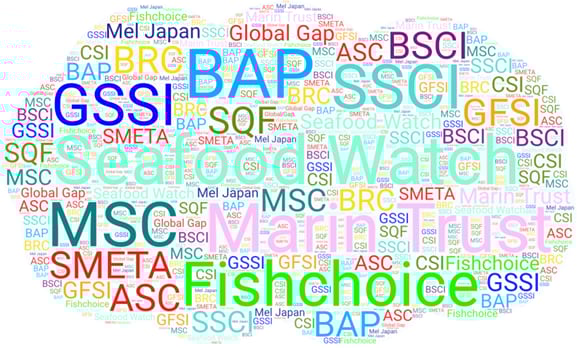
Requirements for third-party audits and certifications to verify food safety, quality, traceability, and environmental and social responsibility have increased significantly in the past several years. As a result, benchmarking organizations have also been created to help differentiate which standards meet international guidelines (Figure 5).
FIGURE 5. Examples of Benchmarking and Certification Schemes for Verifying Food Safety, Quality, Traceability, and Environmental Responsibility in the Seafood Sector (Image credit: L. Goché)
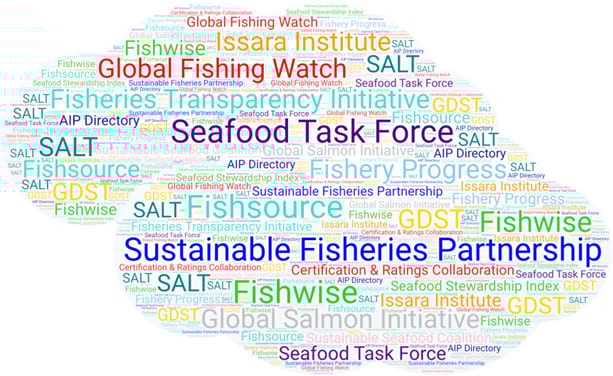
Beyond the numerous certification, ratings, and benchmarking standards, there has also been a proliferation of international, pre-competitive collaborators, improver programs, and reporting organizations to help ensure that supply chains are free of environmental and human rights abuses and illegal, unreported, and unregulated (IUU) fishing (Figure 6).
FIGURE 6. Examples of International Collaborators, Improver Programs, and Reporting Organizations in the Seafood Sector (Image credit: L. Goché)
Evolving Regulatory Frameworks
New and proposed regulations in the U.S., EU, Canada, and beyond concerning food safety and traceability have been widely reported in this publication and elsewhere. Other, less widely publicized initiatives aim to strengthen environmental and social justice protections across food and other supply chains. A few examples include:
- Port State Measures Agreement (international)
- Corporate Sustainability Due Diligence Directive (EU)
- Uyghur Forced Labor Prevention Act (U.S.)
- Domestic Trade of Specific Marine Animals and Plants Act (Japan)
- Fighting Against Forced Labor and Child Labor in Supply Chains Act (Canada).
Tying it All Together: Leveraging Opportunities
As outlined earlier, the responsible seafood supply is a major contributor to economic prosperity and must be expanded. At the same time, consumer pressure to know more about the sustainability of the food supply is increasing.
To remain relevant, seafood businesses need to proactively adapt at pace. In doing so, forward-thinking organizations can maximize opportunities and their ROI potential in the short and long term.
Excess Cost, Risk Reduction, and Revenue Gains
There are tremendous costs associated with inadequate food safety management systems (FSMSs). This also applies to quality management systems (QMSs), where customer complaints and rejections become visible. In both cases, reputational damage and customer loss can be devastating for a business.
Excess costs also arise where ESG is lacking. There has been a surge in sensationalist articles, documentaries, and lawsuits aimed at companies and industries pertaining to supply chain sustainability. Even if allegations are disproved, damage from due diligence defense and reputational costs remains.
Reducing all of these costs boosts the bottom line, but there are other financial benefits to including these in business priorities. For example, a 2024 report11 by Deloitte and the NYU Stern Center for Sustainable Business states, "Of the 350 global food and agriculture executives surveyed, 99 percent reported experiencing revenue growth and 98 percent reported cost reductions resulting from their investments in sustainability strategies." On revenue growth, 65 percent realized 2–5 percent, while 14 percent experienced greater than 5 percent. Regarding cost reduction, 54 percent experienced 2–5 percent, while 20 percent had greater than 5 percent.
Four Key Elements
We should expand the concept of building a food safety culture, marrying business development (BD) (e.g., sales, procurement, research and development, and marketing), food safety (FS), quality (QA), and sustainability (ESG). Recognizing that short- and long-term viability is heavily influenced by the intersection of these elements: Business success = BD + FS + QA + ESG.
Although some seafood companies have risen to this occasion, too many still rely on outdated approaches that are not confined to seafood:
- Operating in silos, where procurement, sales, marketing, FS, QA, and ESG are separate from and do not actively support one another
- Maintaining cost, not profit, centers, where FS, QA, and ESG are viewed as necessary cost centers that do not contribute to revenue and the bottom line
- Remaining under-resourced, where these areas are sometimes significantly understaffed and overworked, taking a back seat to all other priorities until something goes wrong
- Supplying, or buying, products based solely on price.
These outdated approaches can put teams in conflict with one another by making them believe they have competing goals.
The Business Plan
Business development and strategic planning goals are typically set by senior management and primarily focused on finance and BD components. These goals typically exclude FS, QA, and ESG.
A comprehensive, cohesive business plan developed by cross-functional teams across the four elements is more appropriate in the evolving landscape of today and tomorrow. Teams must:
- Understand common goals, how they support and reinforce one another, and the overall success of the business
- Apply existing analytical frameworks typically used for production, FS, or QA [e.g., Plan-Do-Check-Act (PDCA), HACCP, Total Quality Management (TQM)] to each primary aspect of the business
- Include verification policies and procedures (e.g., certification, involvement in improver programs, testing, etc.)
- Know how to package all of this to create impactful, succinct messaging for marketing and promotion.
Making progress starts with leadership, training, and buy-in. When silos are present, it is not uncommon for senior management and those in BD-related departments to be unfamiliar with the regulations, specifications, or sustainability standards governing supplier approval, FS, QA, and ESG systems and policies. Conversely, the goals and constraints on procurement, sales, and other BD elements may not be known or understood by FS, QA, and ESG.
Each of these teams have contributions to make in the business plan. Balance should be part of the goal. Businesses should strive to achieve mutual recognition that every person has a role to play in reducing costs and inefficiencies and optimizing revenue growth through their respective areas, thus contributing to the bottom line. This also builds teamwork and morale.
“It is not enough for a company to simply state that it has safe, quality, sustainable products; increasingly, customers, consumers, and governments want to see evidence supporting these claims.”
Cross-Functional Analysis
Analytical models such as HACCP, PDCA, TQM, and Supply Chain Mapping allow examination of segments of the business to identify critical areas that must be proactively monitored and controlled to reduce or eliminate hazards or defects. The same models can be applied by cross-functional teams to examine key aspects of the business or supply chain together, asking questions such as:
- Where can we improve upon sales, customer acquisition, bottlenecks, costs, margins, risk, opportunities, etc. across all business aspects?
- How can we build systems that become mutually supportive and reinforcing toward the overarching goals of the business?
In today's world, especially as technology evolves, we are inundated by information. In applying such models, it is critical to avoid creating an "analysis paralysis" situation. Data should be generated for a clear reason. To determine what is working and what is not, it is essential to ensure that the correct parameters are being measured, and trend analysis is being applied. Then, root cause analysis and corrective and preventive actions (CAPA)—familiar terms in food safety—can be utilized across the board to address what is not working.
Include Verification
Rising demand for verification is another important aspect of business planning and risk management. It is not enough for a company to simply state that it has safe, quality, sustainable products; increasingly, customers, consumers, and governments want to see evidence supporting these claims.
Verification in the seafood industry can include third-party certification, supply chain performance monitoring, participation in Fisheries Improvement Projects (FIPs), engagement with environmental and social initiatives, and other activities. Verification is not just about checking boxes; it is about brand protection, due diligence, market access, customer acquisition and retention, and so much more. It is also about system effectiveness. Verification is not a total guarantee that nothing will ever go wrong; rather, it facilitates continuous improvement and tests whether the proper systems are in place. It also enhances a company's ability to detect and correct problems in a timely manner.
The Importance of Proper Messaging
The ability to effectively message and market these efforts is critical to benefit realization. Showcasing leadership in these areas, in conjunction with products or services, offers a more complete value proposition. Here, breaking down silos and cross-functional strategic planning are crucial. If the marketing department does not understand the value of the various elements and the "why" behind them, then it will not be able to leverage these elements into a comprehensive, impactful campaign for competitive advantage.
Having applied this holistic approach to successfully gain new customers, diversify product offerings, reduce risk, and boost sales and margins, I can attest to its effectiveness when properly leveraged. During my career, I have utilized this approach in responsible sourcing and sales to demonstrate why a customer should buy from my company rather than from a competitor.
Price matters, of course; but the numbers of buyers and sellers who only care about price are shrinking. Of increasing (and sometimes greater) consequence for buyers and sellers is the assurance that they will not be exposing themselves to unacceptable risks and associated costs through their supply chain agreements.
Such an integrated approach may sound complicated to those not already operating this way, but it does not need to be overly complex. The focus should be on building corporate culture and awareness—and utilizing tools that already exist—in a broader, more cohesive way. This approach is not just for large companies. Small and medium-sized entities can apply the same principles at a scale that fits their operations, thereby removing barriers and proactively adapting for greater resilience and success.
Acknowledgment
The author thanks Nikki Shariat, Ph.D., Associate Professor at the Poultry Diagnostic and Research Center in the Department of Population Health at the College of Veterinary Medicine at the University of Georgia, for her expertise and thoughtful review of this article.
References
- NOAA Fisheries. "Fisheries of the United States." August 25, 2025. https://www.fisheries.noaa.gov/national/sustainable-fisheries/fisheries-united-states.
- FAO, IFAD, UNICEF, WFP, and WHO. 2024. The State of Food Security and Nutrition in the World 2024—Financing to End Hunger, Food Insecurity and Malnutrition in All its Forms. Rome. https://doi.org/10.4060/cd1254en.
- Rabbitt, M.P., M. Reed-Jones, L.J. Hales, and M.P. Burke. Household Food Insecurity in the United States in 2023. U.S. Department of Agriculture, Economic Research Service (USDA-ERS). September 2024. https://ers.usda.gov/sites/default/files/_laserfiche/publications/109896/ERR-337.pdf?v=96530.
- United Nations Department of Economic and Social Affairs, Population Division. 2024. World Population Prospects 2024: Summary of Results. https://digitallibrary.un.org/record/4053940?form=MG0AV3&v=pdf.
- FAO. 2024. The State of World Fisheries and Aquaculture 2024—Blue Transformation in Action. Rome. https://doi.org/10.4060/cd0683en.
- FAO. The State of World Fisheries and Aquaculture: Towards Blue Transformation. June 29, 2022. https://openknowledge.fao.org/server/api/core/bitstreams/48345a43-31da-4136-b4fa-9b110d4917ca/content.
- Nelson, A. "US Seafood Industry Poised for Substantial Growth in 2026." Supermarket Perimeter. December 15, 2025. https://www.supermarketperimeter.com/articles/13532-us-seafood-industry-poised-for-substantial-growth-in-2026.
- FMI—The Food Industry Association. "Power of Seafood 2022." 2022. https://www.fmi.org/docs/default-source/research/pos_2022-top-10-sell-sheet.pdf?Status=Master&sfvrsn=11173d8e_3.
- FMI—The Food Industry Association. "Younger Consumers Spotlight Sustainability." Voice of the Food Industry Blog. July 12, 2023. https://www.fmi.org/blog/view/fmi-blog/2023/07/12/younger-consumers-spotlight-sustainability.
- GlobeScan. "Shoppers Change Buying Habits Amid Rising Eco-Anxiety About the Future of Oceans." June 7, 2022. https://globescan.com/2022/06/07/shoppers-change-buying-habits-amid-rising-eco-anxiety-about-future-of-oceans/.
- Deloitte and NYU Stern Center for Sustainable Business. "Unleashing Sustainable Value in Food & Agriculture." October 2024. https://www.deloitte.com/content/dam/assets-zone3/us/en/docs/services/consulting/2024/nyu-unleashing-sustainable-value-in-food-and-agriculture-full-report1.pdf.
Lisa Goché is a native Alaskan with decades of seafood expertise. She spent years on land and sea in remote parts of Alaska and Russia in production and as a director of FSQA. After relocating, she served in C-suite roles, working internationally across the wild, aquaculture, and feed sectors. A cross-functional leader, she has managed business development, supply chains, certification, ESG, procurement, sales, FSQA, and more.
Lisa is CEO of Seafood Collaborators LLC. Her team transforms challenges into solutions, combining practical approaches to compliance and operational improvements with strategies to help drive clients' financial success. Previously, she was Interim CEO of the Global Sustainable Seafood Initiative, Vice President of Grobest Seafood Global, Vice President of Best Aquaculture Practices/GSA, and President of Surefish. Lisa has served on many international boards and holds a B.A. degree in economics and business.