
SEPTEMBER 2022
Shades of
RED
Seeing red can be a good thing when it comes to making foods and beverages more alluring.
Part 2
The rapid transition to natural sources for food colorants has color makers giving new reds a green light. Video courtesy of: Getty Images / Mariia Kozub
Betalain color sources from beets have become one of the more popular sources for red food colorants in recent years, especially in view of their phytochemical benefit. But betalain reds can deteriorate in the presence of heat and light. In foods where high temperatures and translucent final packaging are used, carminic acid or red potato extract might be more suitable options. Beet juice tends to perform best in bakery products and low-moisture snacks.
Lipids can have a negative impact on food colors. In high-fat-content applications, such as cheeses, crackers, plant-based dairy alternatives, ice cream, and bakery products, annatto extract is an excellent natural red candidate. Derived from the seeds of the achiote tree (Bixa orellana) and rich in vitamin A as well as the powerful antioxidant form of vitamin E, tocotrienol, annatto extract has a yellow-orange hue that can be combined with other natural red pigments to produce a range of desirable hues that can indicate savory flavor profiles such as cheesiness, spiciness, and smokiness.
By Olivia Conrad, Contributing Technical Editor
Dairy Red
Complex food matrices, such as dairy products and plant-based meats, also benefit from natural reds. These formulations require a pigment that can remain stable throughout shelf life in low-temperature and relatively low-acid conditions. Fruit-flavored dairy products such as yogurt, kefir, and ice cream all benefit from fruit and vegetable-derived red pigments. Moreover, colorant technology has opened the door to a number of such natural options that avoid past tendencies to “bleed” into the surrounding matrix in layered formulations.
In plant-based meat alternatives, berry-derived red colorants from pomegranate extract, cherry extract, tomato lycopene, and other plant sources can impart the appetizing bright-red shade of fresh meat. Importantly, these pigments remain stable during heat processing. Natural brown colorants, such as those from apple extract, are sometimes used in combination with natural reds to produce a realistic meat analog that changes color upon cooking, yielding the desirable rusty-brown color that consumers associate with cooked meat.
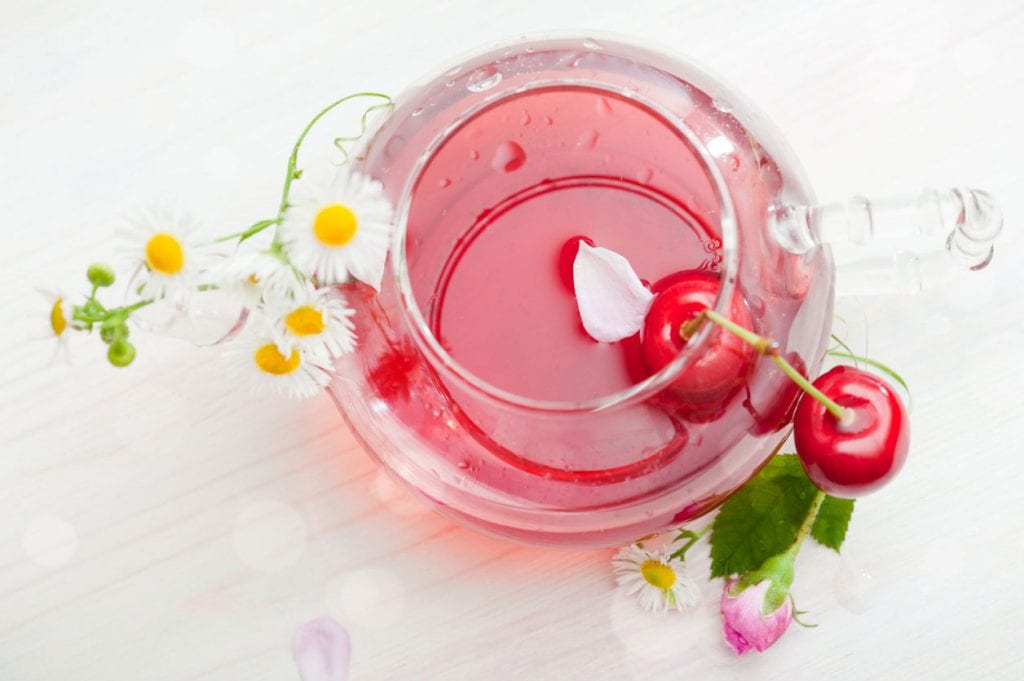
At the opposite end of the formulation spectrum from savory foods, in sweet and juice-based beverages red sings a different tune—one of ripe, bright fruit flavors. Photo courtesy of: Comax Mfg. Corp./FFP, Inc.
Tiny Partners
Red pigments produced using biotechnology are now an option for product developers. “The FDA already has approved beta-carotene from the fungus Blakeslea trispora and the microalgae Dunaliella salina,” notes Upasana Hariram, MS, a product manager for the food safety consulting company Merieux Nutrisciences, a division of the Institut Mérieux. “There are approved microbial pigments such as astaxanthin, a pigment produced by microalgae, and prodigiosin is a red pigment applied in yogurt and beverages and produced by different strains of the bacteria Serratia marcescens.”
Producing food colors using fermentation has significant benefits, as it allows for a high level of precision and control of production conditions. “The growth of microorganisms is scalable and does not depend on seasonal availability,” explains Hariram. “Techniques in genetic engineering can be used to develop strains with highest yield and desirable properties of the pigment.”
She adds, “Many of the pigments produced from microorganisms not only have an application as a coloring agent but also have other beneficial properties, such as antioxidant, antimicrobial, and anti-inflammatory capacities.” Other red pigments produced using microorganisms and boasting great potential, according to Hariram, include phycoerythrin (derived from algae and cyanobacteria), rubrolone (from Streptomyces echinoruber), anthraquinones (from Penicillium oxalicum), and lycopene (from Fusarium sporotrichioides and Blakeslea trispora).
To further serve consumers’ interest in health and wellness, brands and developers are also leveraging the use of natural reds that also carry health-promoting properties. Red palm oil, for example, is derived from the palm berry fruit that grows on oil palm trees (Elaeis guineensis).
As with annatto, red palm oil is rich in compounds of vitamin A and vitamin E, including beta-carotene, tocopherols, and tocotrienols, all of which reflect wavelengths in the red, orange, and yellow portions of the visible light spectrum. These compounds offer potent antioxidant, neuroprotective, and other healthful properties.
Red palm oil can be used as a natural red coloring agent in oil-based foods such as sauces, dips, dressings, and confections. Because controversy surrounding sourcing of palm oil exists, brands and manufacturers should strive to source this ingredient from sustainable sources that do not promote deforestation and natural habitat destruction.
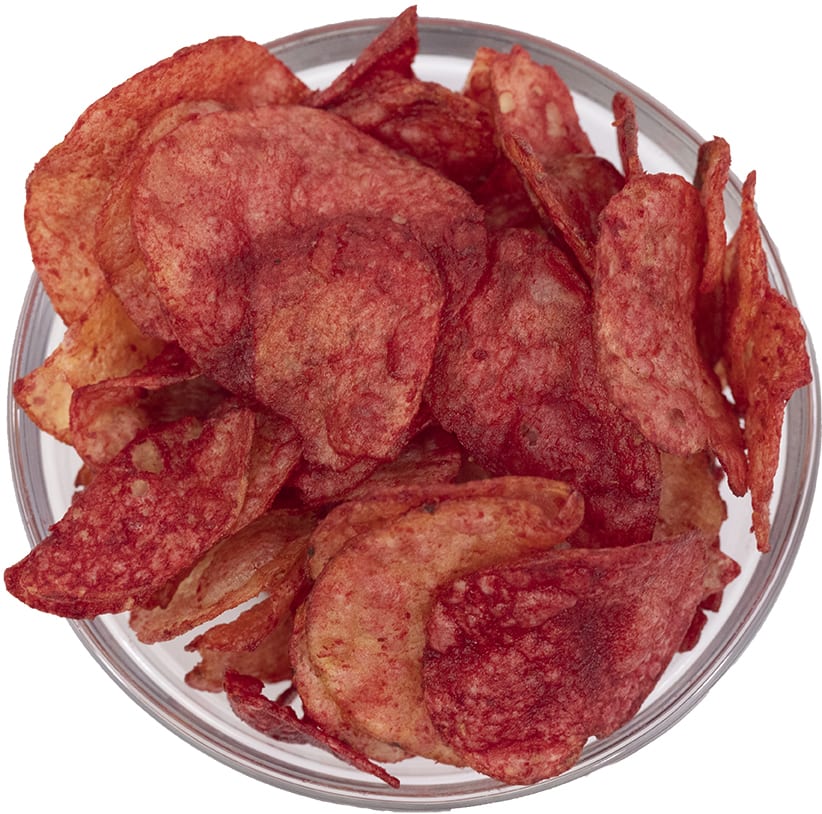
Natural reds from something as basic as chili pepper powder can create a paradigm shift in consumers’ flavor and experiential expectations. Photo courtesy of: Sensient Technologies Co.
Seeing Flavor
Today, consumers are enticed not only by clean ingredient lines, but also by bright, vibrant, eye-catching colors. Various shades of red can communicate exciting sensory experiences that the adventurous are seeking. A bright red-orange seasoning on the surface of a chip cues a red-hot flavor and mouthfeel, while the cheerful pink of a berry-flavored kefir cues a mouthwatering fruity flavor.
As consumers seek more novelty and innovation when it comes to foods, shades of red may be utilized in more unexpected ways, such as in a pizza-flavored seasoning on popcorn, or in a coated red-velvet ice cream bar. In order to achieve a comprehensive array of red shades, developers can formulate with more than one source, plus other natural colors, such as greens, blues, and browns. Working together, product developers and colorant technologists can pinpoint the ideal color system for their formulation by evaluating the characteristics of the food matrix, color solubility, and processing and storage conditions.

Lighter shades of red, especially in dairy and confections, can convey softer, more delicate flavors that highlight their natural sourcing. Photo courtesy of: Lycored, LLC.
Developers can work with color manufacturers and suppliers to find just the right blush of red desired for their formulations. Many of today’s suppliers offer natural pigments that have been carefully designed to ensure their stability and attractiveness throughout all processing, storage, and display conditions. PF
Regular contributor Olivia Conrad is a product development scientist for Simply Good Foods Co. is a freelance science writer based in Boulder, Colorado. Holding a food science degree from the University of Maine, she has extensive experience in natural foods product development in categories ranging from frozen desserts to meat snacks. She also is an expert in food safety with a strong working knowledge of FSMA and HACCP principles. She may be contacted at oconrad2013@gmail.com.
SEPTEMBER 2022