Commercial Roof Systems
How AI Is (and Isn’t) Impacting Roofing Jobs
Microsoft study shows blue-collar roofing jobs are safe, but office jobs are at risk
By Chris Gray
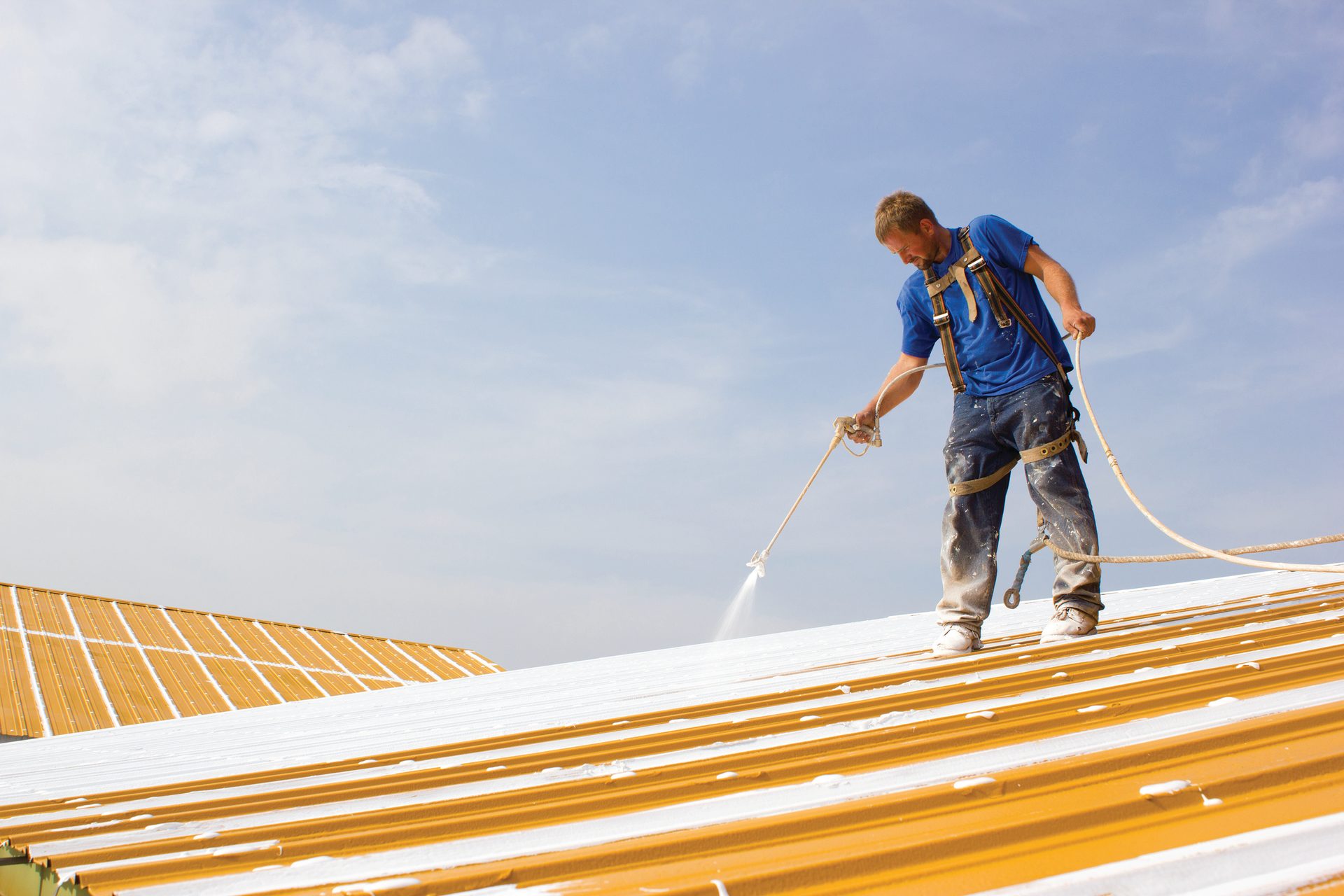
A new study from tech giant Microsoft reveals that roofing and roofing helpers are among the occupations least vulnerable to artificial intelligence (AI).
The study confirms what most roofing contractors have likely concluded: blue-collar jobs, such as roofing, are among those that aren't about to be replaced by AI. Conversely, white-collar jobs within roofing are those that could see AI taking over those roles.
Titled “Working with AI: Measuring the Occupational Implications of Generative AI,” the study analyzed a dataset of 200,000 anonymized and privately scrubbed conversations between users and Microsoft Bing Copilot, a publicly available AI chatbot, from nine months of usage.
Researchers determined the most common work activities people sought Copilot’s assistance on (for example, translating a document) and how successfully and broadly those activities were completed. They then combined that with data on which occupations perform those activities.
Tasks were analyzed by the “user goal” and “AI action.” The user goal was defined as someone seeking AI assistance for a task, while the AI action was when the AI itself performed a task in the conversation.

How Roofing Jobs are Impacted by AI
Two lists emerged from the study: the 40 most impacted occupations and the 40 least impacted occupations. Among the 40 jobs with the lowest exposure to AI, “helpers–roofing” is 25 on the list, while “roofers” is 27.
“The least-impacted occupations include occupations that require physically working with people … operating or monitoring machinery … and other manual labor,” the study said.
Other occupations facing little to no impact from AI include dishwashers, massage therapists, maids, cement masons and nursing assistants.
Meanwhile, tasks that involve information gathering, writing and communicating with others are the most common user goals in Copilot.
“We find the highest AI applicability scores for knowledge work occupation groups such as computer and mathematical, and office and administrative support, as well as occupations such as sales, whose work activities involve providing and communicating information,” the study states.
Among the top 40 occupations with the highest ability score are sales representatives of services, telephone operators and customer service representatives. In other words, sales and administrative roles in roofing companies are at high risk of AI adoption and impact.
"Contractors who embrace AI now are going to close jobs faster, reduce overhead, and deliver a smoother customer experience. The gap between AI-powered companies and old school operators is widening so fast."
Automation or Augmentation?
The study’s goal was to contribute to the ongoing discourse over how much AI automates work activities versus augments them. For example, if a roofing contractor discovers its sales reps are 40% better with AI, does the company hire more reps to maximize that potential, or does it hire fewer reps because they can produce the same number of results?
“Our data is only about AI usage and we have no data on the downstream impacts of that usage, so we only weigh in on the automation vs. augmentation question by separately measuring the tasks that AI performs and assists,” the report says.
AI isn’t about to replace roofers, but it can replace inefficiencies within roofing. AI is already used for quicker and more accurate inspections, measurements and estimates. It is also enhancing CRM systems and streamlining tasks like scheduling and communications. Contractors even turn to it for marketing assistance.
“Early adopters are going to win bigger," said Josey Parks, CEO of RooFix and Think Unlimited, in a Best of Success podcast. "Contractors who embrace AI now are going to close jobs faster, reduce overhead, and deliver a smoother customer experience. The gap between AI-powered companies and old school operators is widening so fast."
One caveat of the study is that it focused on large language models (LLMs), which tend to slant toward communications-focused tasks. Other AI models could impact roofing, especially if they’re applied to robots that can install roofing systems, like the ones developed by Renovate Robotics.
“Residential roofing is a $60 billion industry with a broken labor system that can be addressed with robots. We are on a mission to reduce accidents and fatalities, protect homes and businesses from severe weather and accelerate solar deployment,” said Andy Stulc, Renovate Robotics’ CEO, in a written statement.
TeamCraft Roofing, a North Carolina-based commercial contractor, announced it is launching ShelterGuard.AI, an open API platform designed to proactively monitor and assess the impact of severe weather events for commercial real estate.
"ShelterGuard.AI transforms roofing by turning weather into a strategic advantage—detecting severe weather instantly and enabling teams to reach damaged properties within minutes, not days," said Alex Kindruk, TeamCraft's AI engineer.
Roofing distributors may also see automation hitting their branches and warehouses. Companies like Combilift have developed automated forklifts that can store and retrieve basic materials.
HOMEOWNER TRENDS ROOFERS NEED TO KNOW
What:
A must-attend for all roofing contractors who are looking for:
- A better understanding of homeowner expectations for residential roofing contractors when it comes to the overall experience of purchasing a roof.
- Data-driven insight into where those expectations align with roofing contractors – and where they don’t.
- Market insight related to current and future trends in residential roofing.
- Exclusive viewpoints into current and future growth opportunities for contractors.
- Understanding what factors influence the contractor selection process.
- Ideas to improve customer communication and operational efficiency that grow profits.
When:
2 p.m., Thursday, May 23
Presenters:
- Mitch Henderson, co-CEO, BNP Media, Clear Seas Research
- Travis Harvego, CEO, Roofle Technologies. Harvego has more than 10 years of hands-on field experience in customer relationship management, sales, sales management, project management and labor relations.
- Mike Goldenstein, chief revenue officer, Roofle Technologies. With over 30 years in the roofing industry, Goldenstein is a voice contractors trust, and he excels at advocating for industry success and advancement.
- Chris Morris, CEO at Stonegate Group LLC. Morris boasts extensive expertise in roofing, digital marketing and AI-driven sales automation.
Art Aisner is editor-in-chief of Roofing Contractor. Reach him at 248-244-6497 or aisnera@bnpmedia.com.
Chris Gray is editor of Roofing Contractor. Reach him at 248-244-6498 or grayc@bnpmedia.com.
Luis Ramos and Nick Doran are territory managers for low-slope roofing manufacturer MuleHide, serving the East Florida and Central and South Texas territories, respectively. With nearly 25 years of combined experience in the roofing industry, they are the lead points of contact for contractors in their territories. Reach them at luis.ramos@mulehide.com and nick.doran@mulehide.com.