Steel-framed curtainwalls combine exceptional strength, slender aesthetics, and superior thermal performance to help architects design energy-efficient, airtight building envelopes that meet modern sustainability standards. By Chuck Knickerbocker
Optimizing Energy Efficiency with Steel-Framed
Curtainwalls
Steel-framed curtainwalls combine exceptional strength, slender aesthetics, and superior thermal performance to help architects design energy-efficient, airtight building envelopes that meet modern sustainability standards. By Chuck Knickerbocker
Optimizing Energy Efficiency with Steel-Framed
Curtainwalls
xxxxx. xxx
xxxxx
xxxxxxxxx
xxxxxxxxxxxxxxx By xxxxxxxx
h2 - xxxx
h3 - xxxx
H1 headline
Design professionals have long relied on curtainwalls to create monumental entrances, connect interiors to the outdoors, and introduce abundant natural light into buildings. As energy efficiency and whole-building performance become central to modern design, these sophisticated glazing systems now play a critical role in reducing operational carbon footprints and improving thermal performance.
While discussions about glazing systems often focus on selecting the right glass—low-emissivity (low-e) coatings, insulated glass units, and double- or triple-glazed assemblies—the framing system is equally important. The frame determines the possible expanse of unobstructed glass and balances daylight transmission with overall energy performance. Material selection for the framing system is therefore key.
The Role of Steel in Curtainwall Design
Among framing options, steel stands out for its superior strength and stiffness. With a Young’s modulus of 29 million psi—nearly three times that of aluminum—steel allows for longer spans between supports and larger uninterrupted glass areas. This not only enhances aesthetics by reducing the grid-like appearance but also allows more daylight to penetrate interior spaces.
Steel profiles can also be smaller than aluminum ones, since steel’s higher strength enables slimmer members even for large spans. These smaller profiles contribute to cleaner sightlines and greater design flexibility. Moreover, modern steel framing systems combine strength with advanced manufacturing and thermal design innovations, achieving energy performance without sacrificing creative freedom.
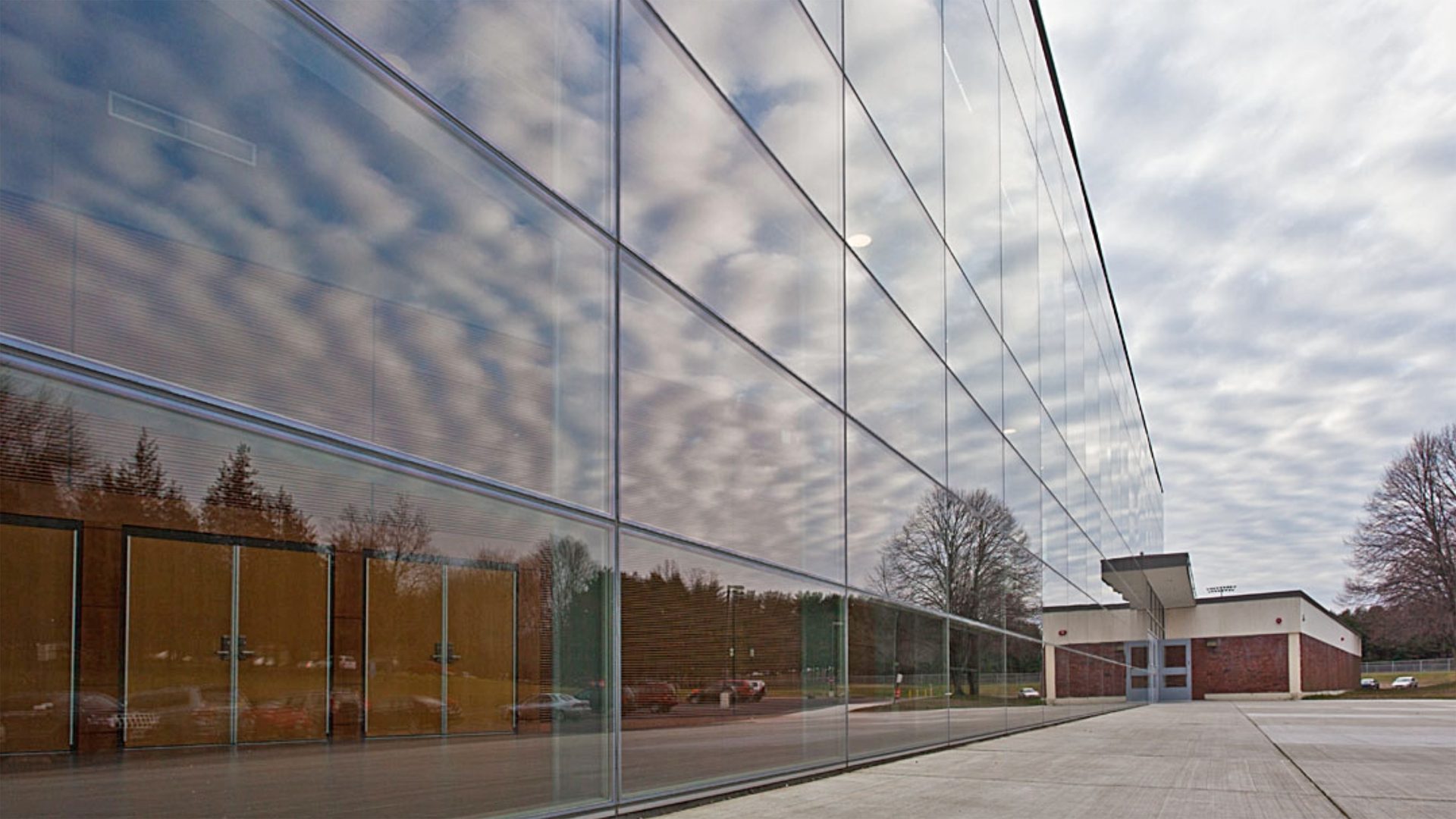
A New Jersey office designed by Gensler, featuring a NanaWall HSW60 single-track system | Photography by Garrett Rowland Photography

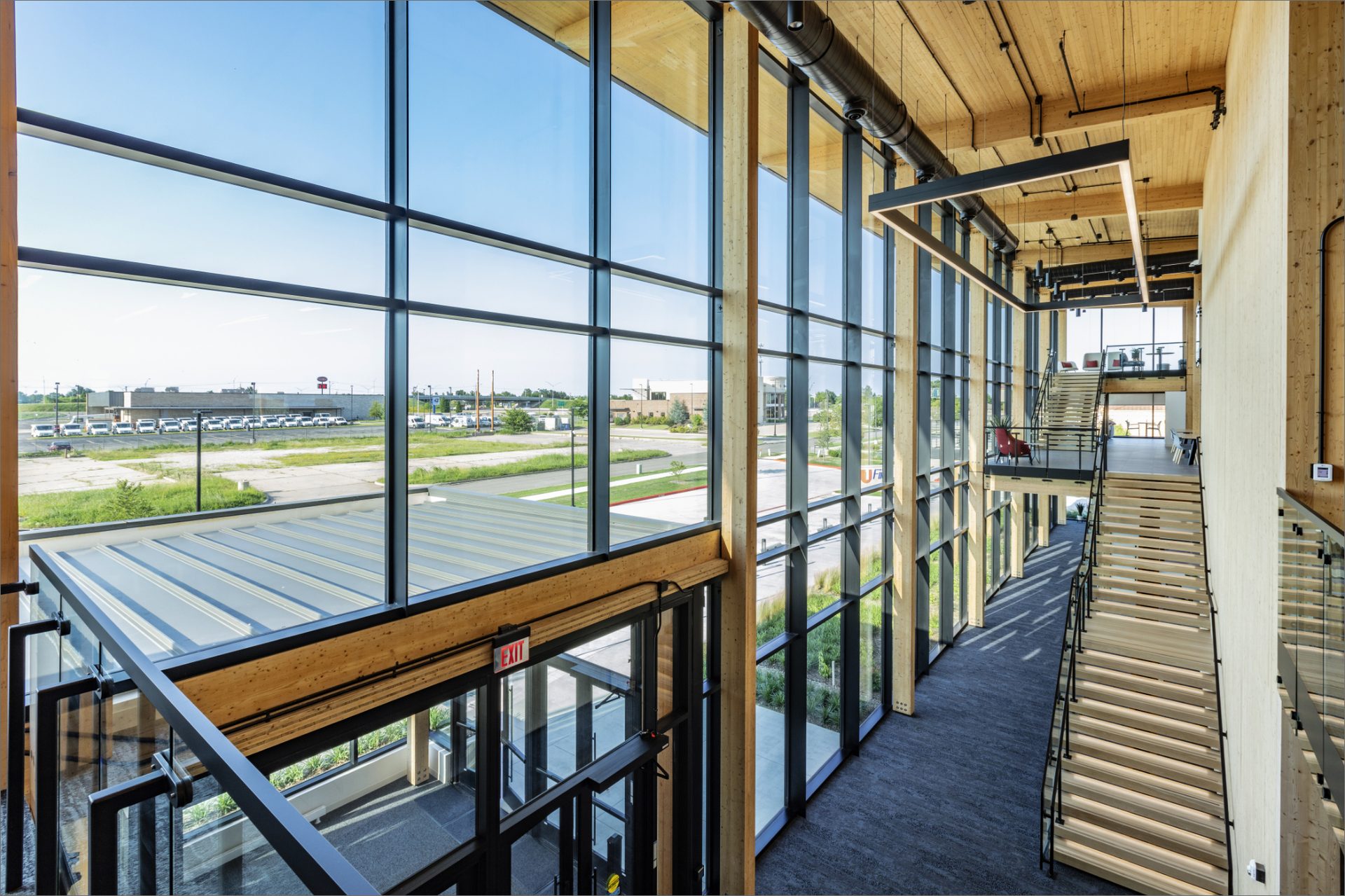
The office of an Omaha financial institution designed by Alley Poyner Macchietto Architecture, featuring a Generation 4 acoustical, folding glass wall system.
Improved Thermal Compatibility
Although glass dominates the visual area of curtainwalls, the metal frame often has higher thermal conductivity. For example, aluminum’s conductivity is approximately 118 Btus/hour, which readily transfers heat. Thermally broken frames can mitigate this, but they add complexity.
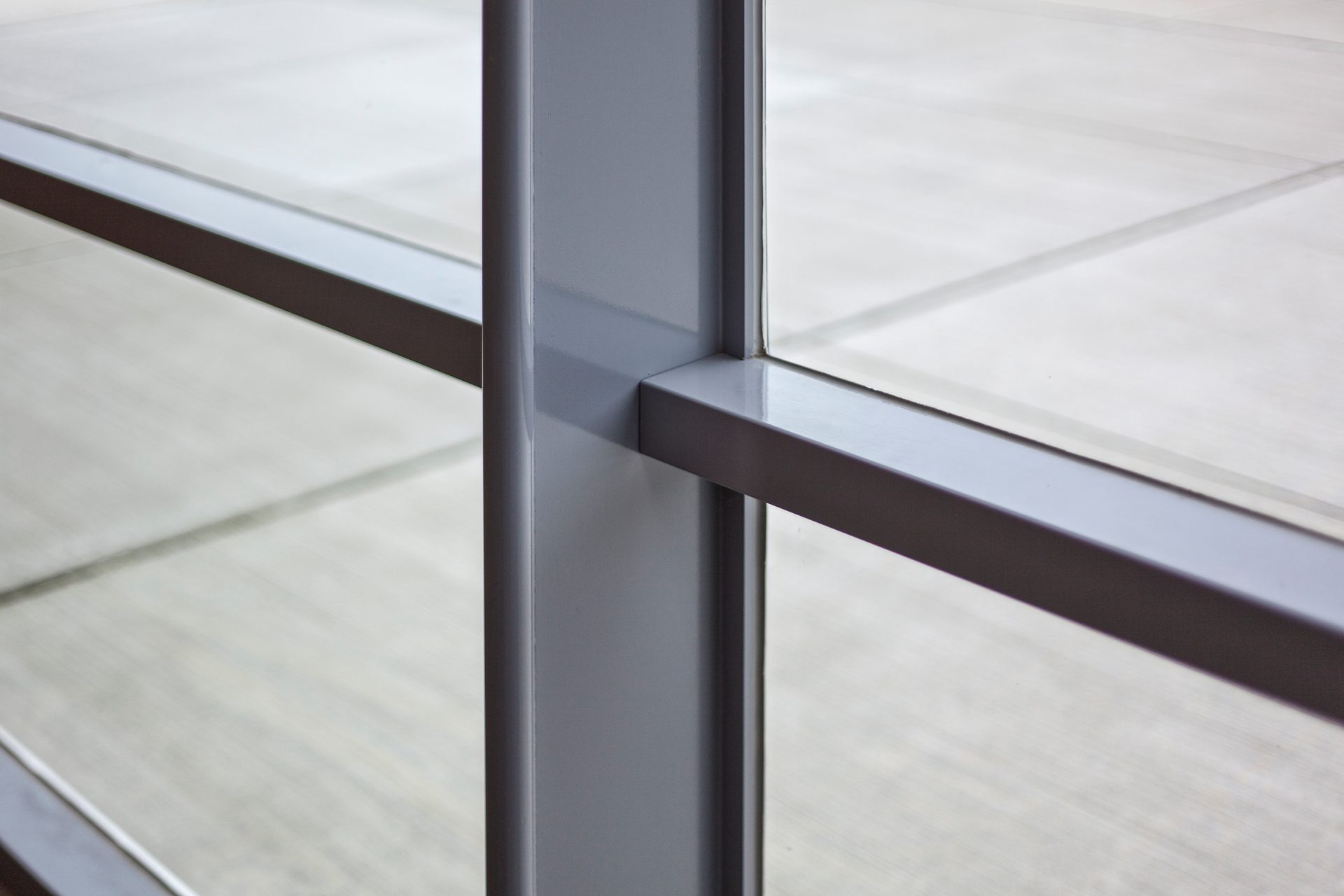
Steel, by contrast, has a thermal conductivity about 74 percent lower than aluminum’s (31 Btus/hour). This reduces heat transfer and simplifies design, as steel typically doesn’t require thermal breaks. Because of its strength, steel also minimizes the amount of framing material required, further enhancing the system’s thermal performance.
Computer simulations following the National Fenestration Rating Council (NFRC) 100 Procedure show that steel-framed curtainwalls with 25.4 mm (1 inch) IGUs and low-e coatings achieve U-values between 0.29 and 0.39 Btu/h·sf·°F, surpassing many aluminum systems.
Airtight Building Envelopes
Beyond thermal conductivity, airtightness is essential for energy efficiency. Steel curtainwalls excel here due to their material compatibility with glass and concrete. Steel’s coefficient of thermal expansion (12 × 10⁻⁶ m/m·°C) closely matches that of glass (9) and concrete (10), unlike aluminum (23.6). This minimizes stress and potential sealant failure from temperature fluctuations, maintaining air- and water-tight seals over time.
Continuous gasketing—typically extruded silicone—further prevents air and water infiltration by sealing joints and isolating steel from moisture. When tested per ASTM E283/E283M, steel curtainwalls demonstrate air leakage rates of less than 0.01 cfm/sf under a pressure differential of 6.24 lb/sf, making them nearly airtight and reducing HVAC loads.
Caption Goes Here
Caption Goes Here
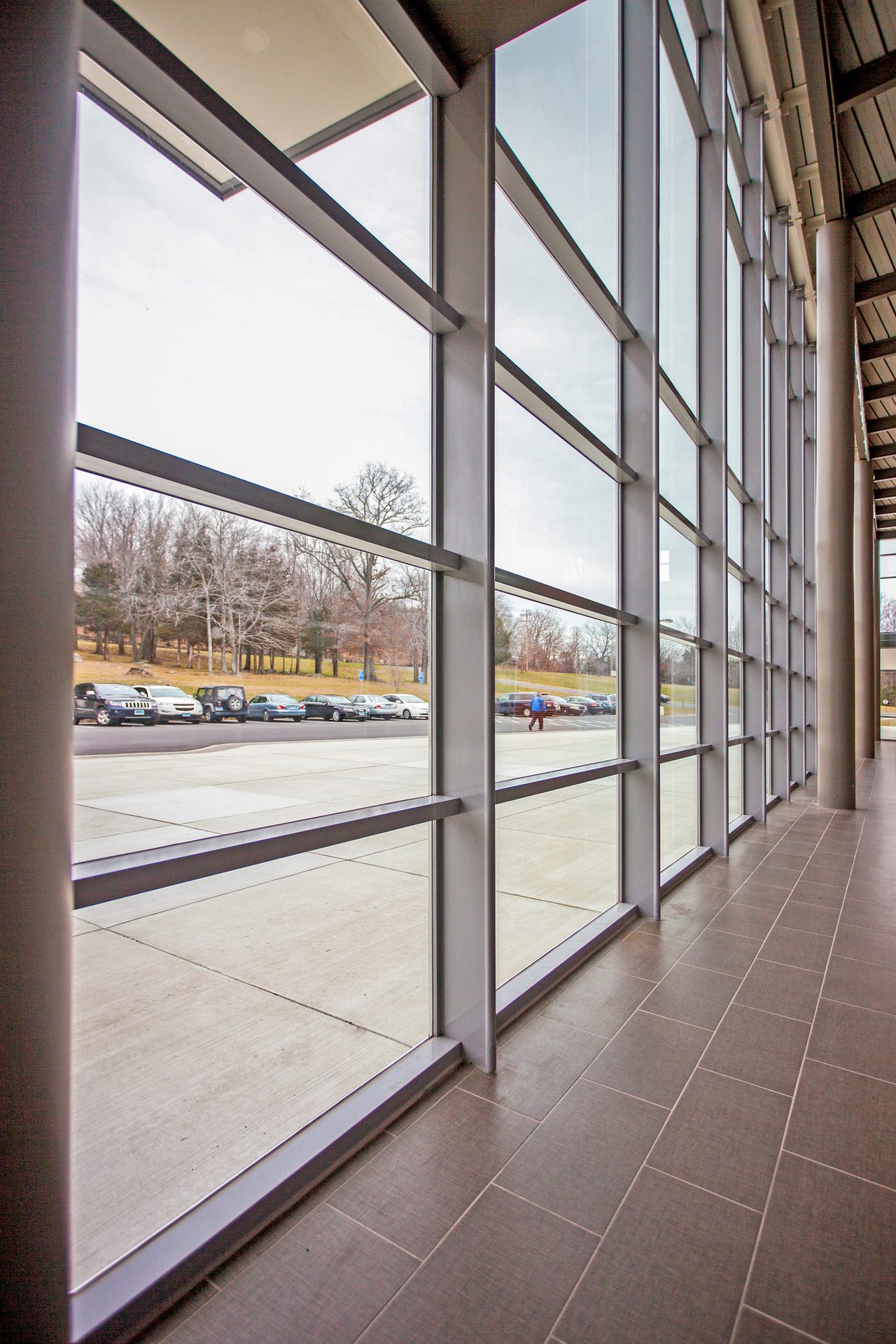
Caption Goes Here
Supporting Heavy Triple-Glazed Systems
In response to stricter building performance standards and colder climates, many designers now specify double- or triple-glazed systems for superior thermal control. However, triple glazing can be heavy—up to 10 lb/sf for 45 mm (1.7 in.) thick units—posing challenges for aluminum frames.
Steel’s inherent strength easily supports heavier glazing, accommodating units up to 76 mm (3 in.) thick and weighing 23 lb/sf, without requiring bulky profiles or added supports. This enables both energy efficiency and design elegance. NFRC simulations of steel frames with triple glazing show U-values as low as 0.19 Btu/h·sf·°F—a benchmark for high-performance façades.
Aesthetic and Efficient Envelope Solutions
As sustainable design becomes the norm, steel-framed curtainwalls offer architects and builders the ability to meet stringent energy codes and green building standards—such as LEED and the Living Building Challenge—while preserving architectural freedom. By combining strength, slender sightlines, and thermal efficiency, steel curtainwalls contribute to lower operational carbon and superior whole-building performance.
Images courtesy of TGP.
Chuck Knickerbocker is the curtainwall manager for Technical Glass Products, a supplier of fire-rated glass and framing systems, along with specialty architectural glazing products. With over 44 years of curtainwall experience, Chuck has successfully worked with numerous architects, building owners and subcontractors from development of schematic design through installation.
Chuck Knickerbocker is the curtainwall manager for Technical Glass Products, a supplier of fire-rated glass and framing systems, along with specialty architectural glazing products. With over 44 years of curtainwall experience, Chuck has successfully worked with numerous architects, building owners and subcontractors from development of schematic design through installation.