While expansion beads are commonly used in commercial construction, strategically installing them in long or transitional walls and ceilings of residential homes can prevent cracks, accommodate structural movement, and even enhance fire safety, despite creating visible lines in the finish. By J. Michael Osborne
Using Expansion Beads
in Residential Construction
xxxxx. xxx
xxxxx
xxxxxxxxx
xxxxxxxxxxxxxxx By xxxxxxxx
h2 - xxxx
h3 - xxxx
H1 headline
If you already know a thing or two about expansion beads and control joints, you’ve probably only ever heard about them used in commercial construction. That’s because, well, you have to use expansion beads in commercial construction, as required by most building codes, when your wall partition runs unbroken for at least 30 feet.
But, code requirement or no code requirement, movement in drywall causes cracks (or worse) in all kinds of structures, including single-family homes. Installing expansion beads in certain key areas can prevent many of these kinds of cracks. Here’s when and where to use expansion beads in residential construction to keep your drywall finish looking great for years to come.
What’s an Expansion Bead?
As a structure’s framing inevitably moves slightly over time, the drywall needs to move along with it, or else the stress of all that movement will cause it to crack in places. In a shorter wall partition, the drywall has some wiggle room. But the longer the wall or ceiling spans, the less the drywall is able to move, and the more likely cracks are to occur. When you install an expansion bead with a flexible center in one or two strategic areas (called “control joints”) along those long walls or ceilings, it eases the stress and allows the drywall some controlled movement to expand and contract along with the framing.
Many manufacturers make a version of an expansion bead, but when given the option, many pro drywallers will choose one made from vinyl/PVC materials for a few key reasons. Most importantly, though, these materials are far more flexible, allowing up a certain degree of controlled movement for the lifetime of the structure. If they get dinged or dented over the years, they’ll essentially bounce back into place, keeping the control joint effective even after some extreme impacts.
A New Jersey office designed by Gensler, featuring a NanaWall HSW60 single-track system | Photography by Garrett Rowland Photography
The office of an Omaha financial institution designed by Alley Poyner Macchietto Architecture, featuring a Generation 4 acoustical, folding glass wall system.
The Case Against Control Joints
Now, when it comes to residential construction, the biggest reason expansion beads are so often avoided (other than ignorance of their existence) is purely aesthetic. It creates a long, noticeable line in the finish, and that’s not exactly something you would put on a Pinterest board for the design of your dream home.
Yet, as pro drywaller Myron Ferguson tells us, the benefits of this compromise may outweigh the risks:
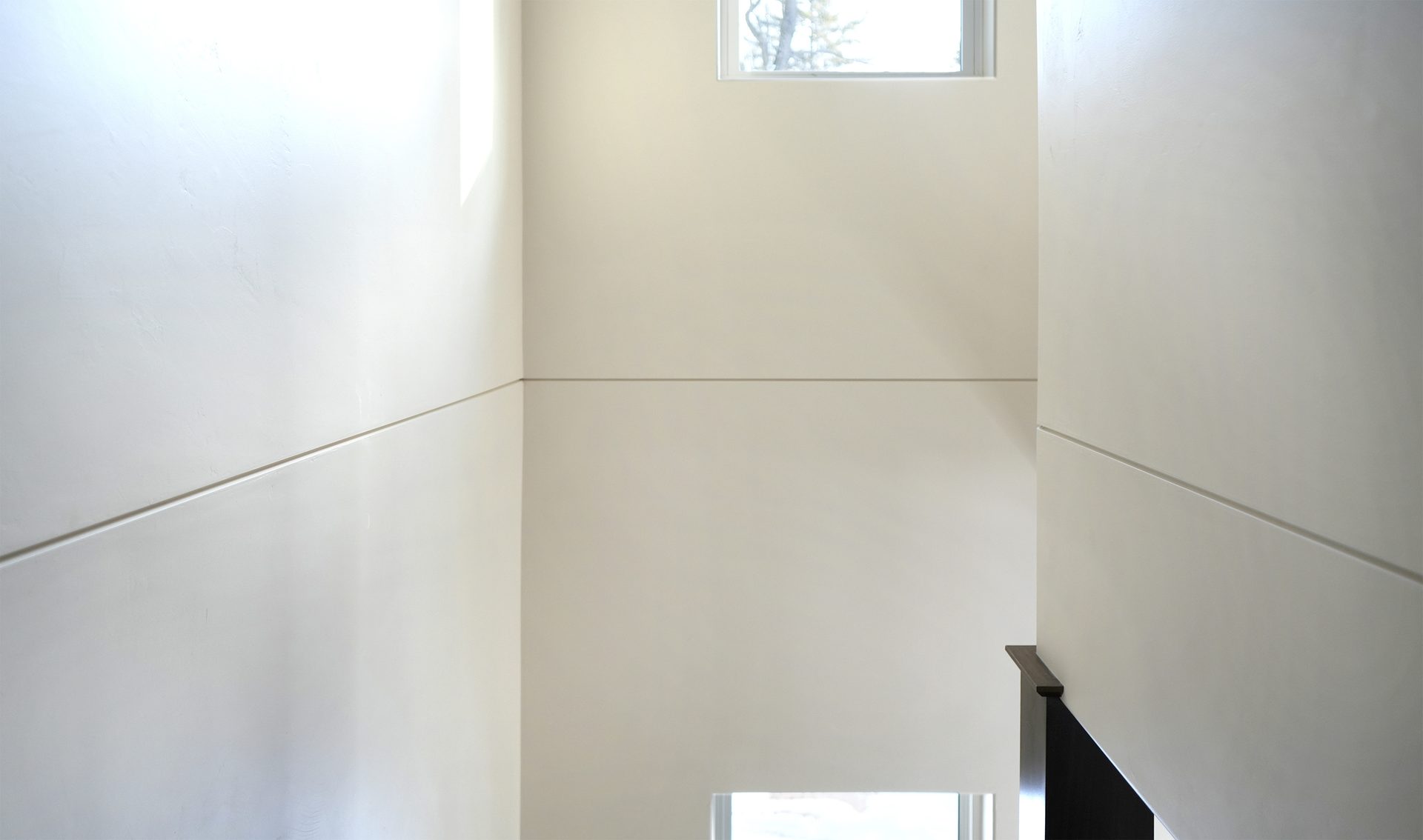
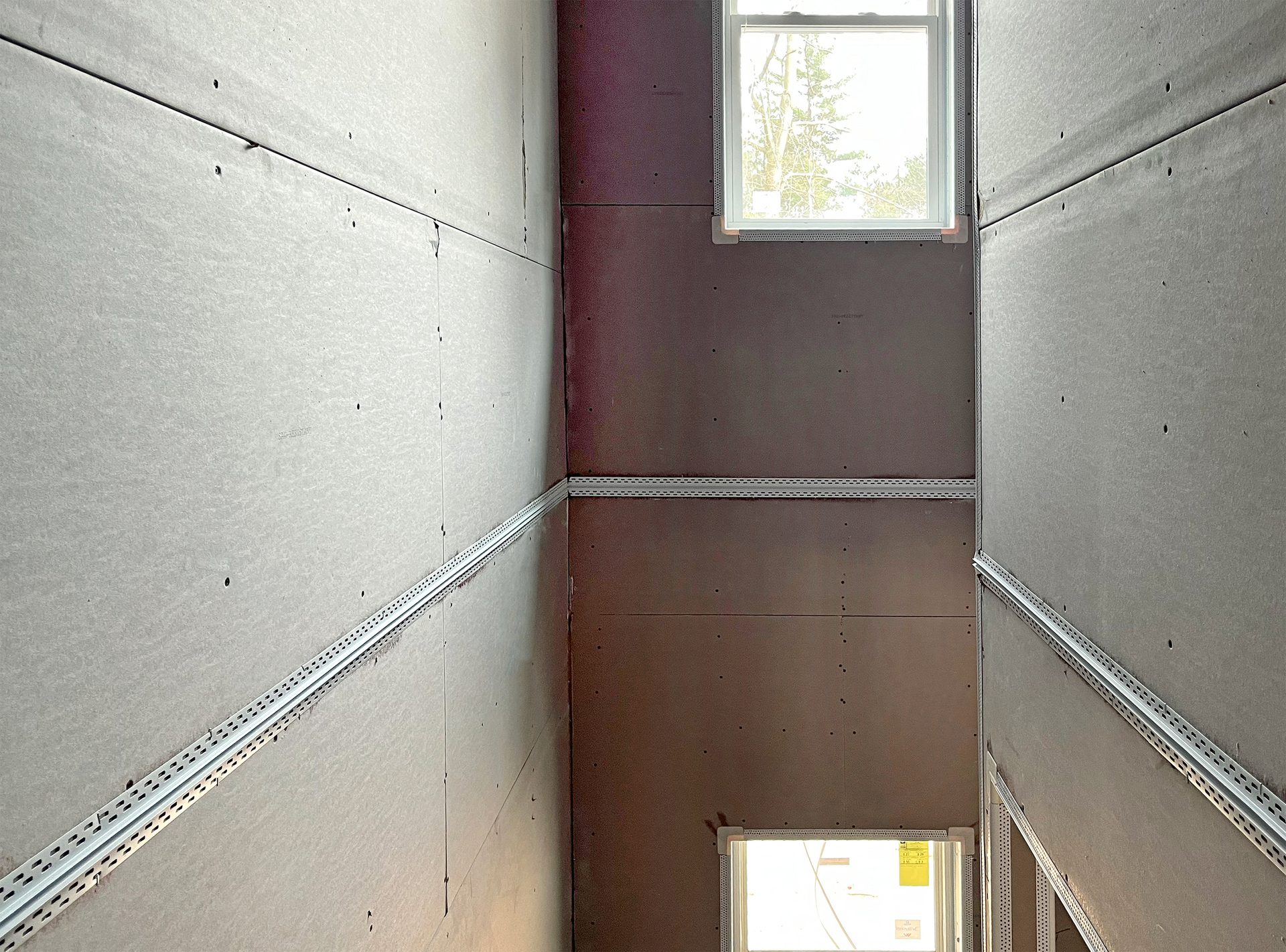
“The primary concern with expansion beads in the residential setting is the visible line they create across a section of ceiling, on a stairway wall or up a wall,” says Ferguson. “However, the line created by expansion bead is a clean, straight line that looks much nicer than a ridged or cracked seam.”
Use Expansion Beads in Large, Continuous Spaces
As with commercial construction, if you have a large expanse of drywall that goes unbroken for up to 30 feet, it’s recommended you protect your finish with an expansion bead.
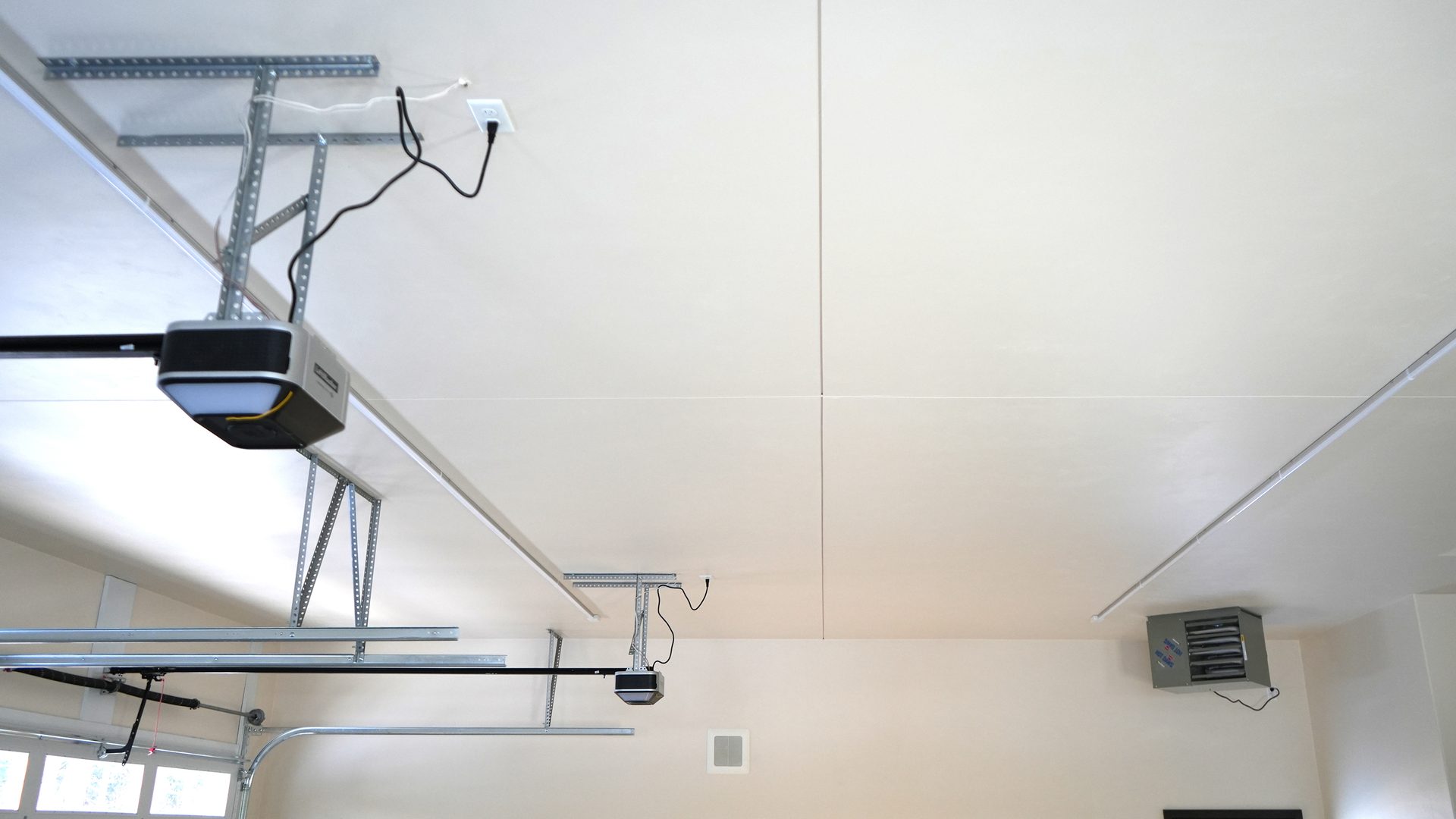
Most often, you’re going to find these massive spaces in areas like garages. In one recent home we worked on, we had a huge garage that the owners wanted to take pride in—not just use as a glorified storage facility no one would ever see. The owners were additionally concerned about fire safety.
So, we installed two lengths of a fire-rated vinyl expansion bead, running horizontally and vertically along the ceiling. With this bead—which is outfitted with an attached intumescent tape that expands when exposed to fire, sealing off the wall joint from the spread of smoke—we were able to protect against structural movement and protect against the spread of fire and smoke (using zero additional backing materials), all in one solution.
A New Jersey office designed by Gensler, featuring a NanaWall HSW60 single-track system | Photography by Garrett Rowland Photography
The office of an Omaha financial institution designed by Alley Poyner Macchietto Architecture, featuring a Generation 4 acoustical, folding glass wall system.
Use Expansion Beads in Transitional Areas
Maybe your home or your next job doesn’t have any 30-foot stretches of unbroken drywall. But these aren’t the only kinds of areas vulnerable to the stresses of expansion. Anywhere there’s excessive structural expansion and contraction, you should consider installing an expansion bead.
For instance, if you’re living in an area with a lot of seismic activity, much shorter runs could still be at risk. But, for most folks, we’re talking about areas where there are transitions in the framing.
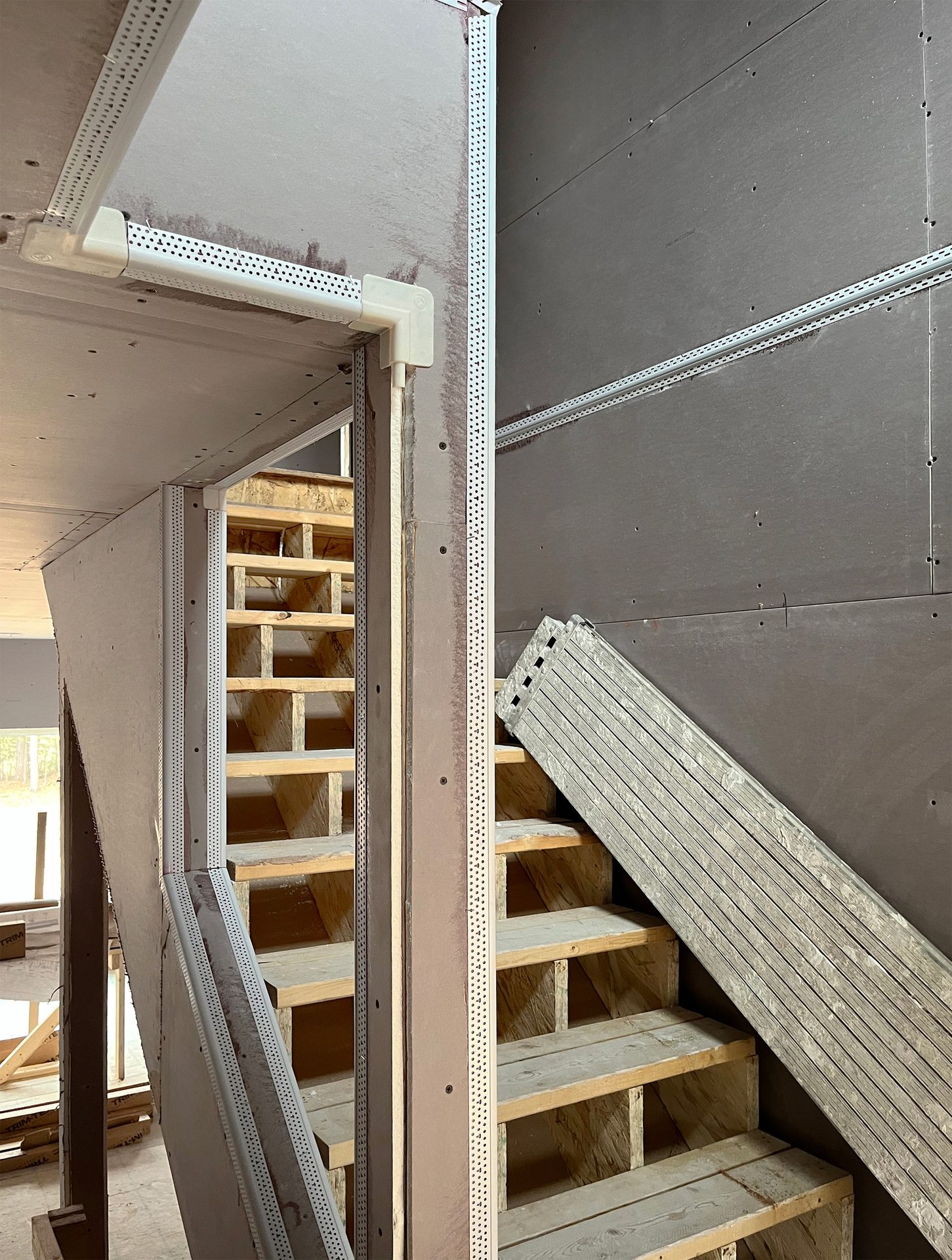
In this home, we used an expansion bead where the framing transitioned into a stairway to protect this crack-prone area. (See the photos above.)
“Many times over the years,” says Ferguson, “I have been in someone’s house either visiting or giving an estimate for work and notice a bump in a large ceiling or on the walls going up to the second story. The homeowner may even point these out to me while stating the drywaller didn’t do a good job. These ceilings and walls are often large, over 20 feet long. An expansion joint is recommended for ceilings and walls every 30 feet, but I have found that there can be problems on shorter spans if there is excessive structural expansion and contraction.”
Expansion beads may not be the most attractive part of your home’s interior layout, but it can prove to be a safeguard against even more unsightly cracks—or in the case of fire-rated control joints, preventing the spread of fire and smoke. Wherever there’s an extra-long, unbroken wall or transitional area in a residential construction project, think like a commercial architect: a control joint and an expansion bead can make all the difference.
Images courtesy of Trim-Tex.
J. Michael Osborne is the content marketing specialist for Trim-Tex Inc. He lives with his wife and son in Chicago. To read his stories and watch his videos, you can visit Trim-Tex.com or follow Trim-Tex on Instagram and YouTube.